ABCDE: The Life-Saving Approach to Emergency Care
Introduction
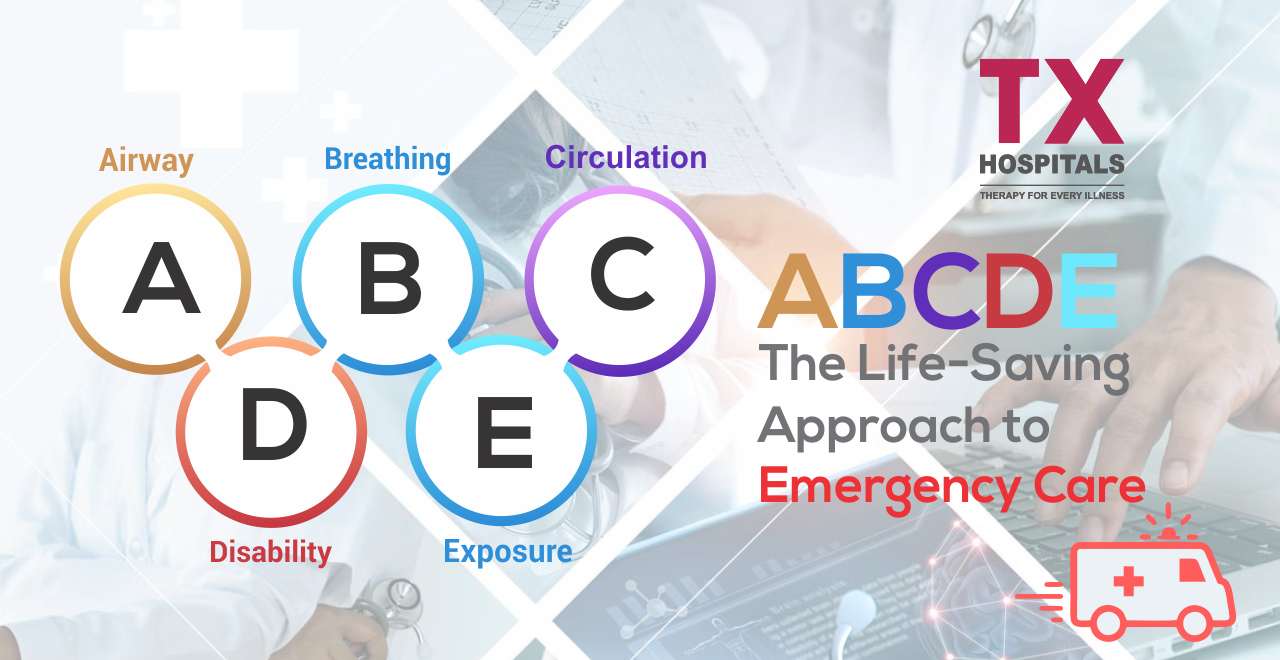
In emergencies, a swift and systematic response is crucial to save lives. The ABCDE approach—an acronym for Airway, Breathing, Circulation, Disability, and Exposure—is a structured method used worldwide by healthcare professionals to assess and manage patients efficiently. Its simplicity and effectiveness make it applicable in diverse settings, from roadside emergencies to intensive care units. This blog explores the ABCDE approach, detailing its steps, evidence-based benefits, and practical applications.
For advanced cardiac care during emergencies, consult the Top Cardiology Hospitals in Hyderabad, such as TX Hospitals. With state-of-the-art facilities and experienced specialists, these hospitals are equipped to handle critical situations, ensuring prompt and effective treatment.
Understanding the ABCDE Approach
The ABCDE approach prioritizes the identification and treatment of life-threatening conditions systematically. The mnemonic stands for:
- A – Airway: Ensure the airway is clear.
- B – Breathing: Assess and support effective breathing.
- C – Circulation: Evaluate blood circulation and manage shock or bleeding.
- D – Disability: Assess neurological function.
- E – Exposure: Inspect the patient for hidden injuries or signs of illness.
This approach is not condition-specific; it focuses on managing immediate threats to life, buying time for diagnosis and treatment.
Step-by-Step Breakdown
A – Airway: Ensure the airway is open and free of obstructions.
Assessment:
- Check if the patient can speak or make sounds.
- Observe for indications of obstruction, such as abnormal breathing sounds or irregular chest movements.
- Inspect for foreign objects, vomit, or swelling.
Treatment:
- Use the head-tilt and chin-lift maneuver or jaw thrust if spinal injury is suspected.
- Remove visible obstructions and use suction if available.
- Provide high-flow oxygen as soon as possible.
B – Breathing: Ensure adequate oxygenation and ventilation.
Assessment:
- Count respiratory rate and observe chest movements.
- Pay attention to unusual breath sounds, such as wheezing or crackling noises.
- Use a pulse oximeter to measure oxygen saturation.
Treatment:
- Administer oxygen via a non-rebreather mask.
- Perform bag-mask ventilation if breathing is inadequate.
- Relieve tension pneumothorax immediately if identified.
C – Circulation: Ensure adequate blood flow to vital organs.
Assessment:
- Measure the pulse rate, blood pressure, and capillary refill time.
- Inspect skin for pallor or cyanosis.
- Look for signs of bleeding or poor perfusion.
Treatment:
- Perform CPR if there is no detectable pulse.
- Control external bleeding with pressure or tourniquets.
- Administer intravenous fluids to address hypovolemia.
- Monitor heart rhythm using an ECG if available.
D – Disability: Evaluate the patient’s neurological status.
Assessment:
- Use the AVPU scale: Alert, Voice, Pain, and Unresponsive to assess responsiveness.
- Check pupillary response and limb movements.
- Measure blood glucose to rule out hypoglycemia.
Treatment:
- Address airway, breathing, and circulation issues first.
- Position unconscious patients in the recovery position.
- Administer glucose for hypoglycemia.
E – Exposure: Identify hidden injuries or signs of illness.
Assessment:
- Fully expose the patient while maintaining their dignity and warmth.
- Inspect for rashes, bruises, or wounds.
- Measure body temperature to detect hypothermia or fever.
Treatment:
- Use blankets or warming devices to prevent hypothermia.
- Treat visible injuries and document findings.
Why the ABCDE Approach Works?
Key Benefits:
- Prioritization: Life-threatening issues are addressed first.
- Universal Applicability: Suitable for all clinical emergencies, regardless of setting.
- Team Coordination: Establishes common situational awareness among responders.
- Time Management: Allows rapid intervention while waiting for definitive diagnosis.
Evidence-Based Impact:
- The ABCDE approach is globally recognized and widely implemented by emergency teams, supported by expert consensus.
- Training healthcare professionals in this method improves confidence and reduces response time during critical events.
Who Can Use the ABCDE Approach?
The ABCDE approach is invaluable for all healthcare professionals, from paramedics to general practitioners. Even laypersons with basic training can use the method in emergencies. In hospitals, it’s applied in wards, emergency rooms, and intensive care units.
When to Use the ABCDE Approach?
- Critical illness or injury: To stabilize patients and prevent deterioration.
- Pre-arrest situations: Early intervention can avert cardiac arrest.
- Post-resuscitation care: Supports recovery when spontaneous circulation is restored.
- Mass casualty events: Helps prioritize and treat patients systematically.
Conclusion
The ABCDE approach is a cornerstone of emergency care, providing a structured and efficient way to assess and treat critically ill patients. Its universal applicability and life-saving potential make it an indispensable tool for healthcare professionals and first responders alike. By mastering the ABCDE method, you can make a difference in life-threatening situations, ensuring timely and effective care when it matters most.
If you're looking for expert cardiac care, consult the Best Cardiac Specialists in Hyderabad at TX Hospitals. Our experienced team is equipped to handle emergencies with precision, offering top-notch care and advanced treatments to ensure the best outcomes for our patients.
Disclaimer
The information provided in this blog is for general health awareness and educational purposes only. It should not be considered a substitute for professional medical advice, diagnosis or treatment. The content may not apply to every individual's health condition. Always consult a qualified healthcare professional for any medical concerns or treatment decisions. Do not ignore or delay medical advice based on the information shared in this blog.
Share this






Book Appointment
Categories
- Health Care
- Mother & Child
- Pediatric
- Health Days
- Urology
- Dental
- Gastroenterology
- Neurology
- Gynecology
- Orthopedics
- Cardiology
- Oncology
- Robotic Sciences
- Nephrology
- Rheumatology
- Orthopaedics
- Pulmonology
- Internal Medicine
- General Medicine
- Gastroeneterology
- Endocrinology
- Dermatology
- Pediatric Urologist
- Ophthalmology
- Gynecologist
- Ophthalmologist
- Ent
- Psychiatry
- Pediatrician
- Health Day
- Spine Surgery
- General Physician
- Awarness Day
- Liver Transplantation Surgery
- internal medicine
- General Surgeries
- Health care
- ENT
- cardiothoracic & vascular surgery
- Pediatric Neurologist
- Gastroenterologist
- Gynecology Hospitals
- oncology
- Trauma Surgeons
- Neuro Sciences
- Internal Madicine
- cardiac sciences
- Genecology
- Dietician
- Diabetology
, ,