Liver Cysts: Are They Dangerous and When Do They Need Treatment?
Introduction
Finding out that you have a cyst in your liver can be worrying, especially when it shows up unexpectedly during an ultrasound or health check-up. The first question that often comes to mind is, "Is it dangerous?"
The good news is that most liver cysts are harmless and don't cause any health problems. Many people live with them without even knowing they exist.
However, not all liver cysts are the same. Some may grow bigger, cause discomfort or need further medical attention.
So, how do you know whether a liver cyst is harmless or needs treatment? Let's understand what liver cysts are, why they develop, their symptoms and when you should see a doctor.
What Are Liver Cysts?
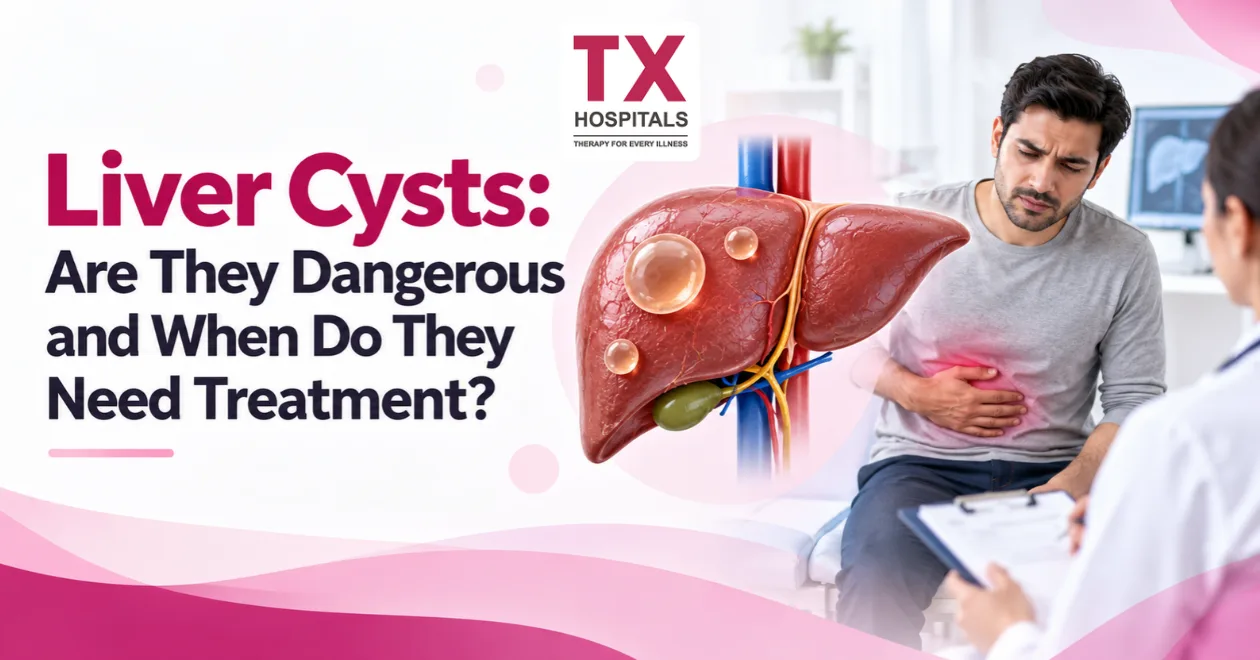
Liver cysts are fluid-filled sacs that develop inside or on the surface of the liver. They can be small or large, and a person may have one cyst or several.
Most liver cysts are non-cancerous and do not affect how the liver works.
In many cases, liver cysts are found by chance during an ultrasound, CT scan or MRI performed for another health concern.
Small, simple liver cysts usually do not need treatment. However, larger cysts or those with unusual features may need further tests.
What Causes Liver Cysts?
Liver cysts can develop for different reasons. Some people are born with them, while others develop them due to certain health conditions.
Common causes include:
- Present from birth: Some cysts develop before birth and may only be discovered later in life.
- Inherited conditions: Certain genetic conditions can cause multiple cysts to form in the liver.
- Parasitic infections: Infections caused by certain parasites can lead to cyst formation.
- Changes in the bile ducts: Some cysts develop due to problems involving the small tubes that carry bile.
- Unknown causes: In many cases, there is no clear reason why a simple liver cyst develops.
Having a liver cyst does not always mean there is an underlying liver disease.
What Are the Different Types of Liver Cysts?
Not all liver cysts are alike. Understanding the type of cyst helps doctors decide whether treatment is needed.
1. Simple Liver Cysts
These are the most common type of liver cysts.
They are usually harmless, contain clear fluid and rarely cause symptoms. Most simple cysts do not need treatment.
2. Polycystic Liver Disease
This is a condition where several cysts develop in the liver.
It is often linked to inherited conditions and may sometimes occur along with kidney cysts.
Some people have no symptoms, while others may experience abdominal swelling or discomfort as the cysts grow.
3. Hydatid Cysts
Hydatid cysts develop due to a parasitic infection caused by Echinococcus.
These cysts need medical attention because they can grow and cause complications if left untreated.
Treatment may involve medicines, a specialised drainage procedure or surgery, depending on the cyst.
4. Complex Liver Cysts
Some cysts may have thick walls, internal partitions, solid areas or other unusual features on imaging tests.
These are called complex liver cysts.
While many are not cancerous, they need further evaluation to rule out infections, bleeding or cystic tumors.
Are Liver Cysts Dangerous?
In most cases, liver cysts are not dangerous.
A small, simple liver cyst usually does not cause pain, affect liver function or turn into cancer.
However, certain cysts may cause problems, particularly if they grow larger or develop complications.
Some possible problems include:
- Pain or discomfort in the upper right side of the abdomen
- Pressure on nearby organs
- Infection inside the cyst
- Bleeding into the cyst
- Rupture of the cyst, which is uncommon
- Blockage of bile flow in rare cases
The risk depends on the cyst’s size, type and scan results. Not all liver cysts are dangerous, but some may need further tests. TX Hospitals, one of the liver transplant hospitals in Hyderabad, offers specialist consultations to check liver cysts and suggest suitable treatment.
What Are the Symptoms of Liver Cysts?
Most people with liver cysts do not experience any symptoms.
When a cyst becomes large enough to press on nearby organs, it may cause discomfort.
Some possible symptoms include:
- Pain in the upper abdomen: A dull ache, usually on the right side.
- Feeling full quickly: You may feel full after eating a small amount of food.
- Swollen belly: A large cyst may make the abdomen look bigger.
- Nausea: Some people may feel sick or uncomfortable after meals.
- Bloating: A feeling of heaviness or pressure in the stomach.
Fever, sudden severe abdominal pain or yellowing of the eyes may indicate a complication and should be checked promptly.
How Are Liver Cysts Diagnosed?
Liver cysts are often discovered during imaging tests done for other reasons.
Doctors may recommend the following tests to understand the cyst better.
Ultrasound Scan
An ultrasound is usually the first test used to check liver cysts.
It helps doctors see the cyst's size, shape and whether it appears to be a simple fluid-filled cyst.
CT Scan
A CT scan provides detailed images of the liver and surrounding organs.
It may be recommended when a cyst is large, causes symptoms or has unusual features.
MRI Scan
An MRI helps doctors examine complex cysts more closely and identify features that may need further attention.
Blood Tests
Blood tests may be advised to check liver function or look for signs of infection.
In certain cases, doctors may also recommend specific tests for parasitic infections.
Not everyone needs all these tests. The choice depends on the findings from the initial examination and scan.
When Do Liver Cysts Need Treatment?
Many liver cysts do not require any treatment. Doctors usually recommend treatment when a cyst causes symptoms, develops complications or has features that need further investigation.
Here are some situations where treatment may be necessary.
1. When the Cyst Causes Pain
A large cyst may press against nearby organs and cause ongoing abdominal pain or discomfort.
If the symptoms are clearly related to the cyst, doctors may suggest treatment.
2. When the Cyst Becomes Very Large
Some liver cysts grow slowly over time.
A large cyst may cause bloating, a feeling of fullness or difficulty eating normal-sized meals.
Treatment depends on the symptoms and the cyst's location, not just its size.
3. When the Cyst Gets Infected
An infected liver cyst may cause fever, abdominal pain and other signs of infection.
This condition needs medical care and may require antibiotics and drainage.
4. When There Is Bleeding or Rupture
Although uncommon, a cyst may bleed internally or rupture.
Sudden, severe abdominal pain may be a warning sign and requires urgent medical evaluation.
5. When the Cyst Looks Unusual
If an ultrasound or CT scan shows thick walls, solid areas or other unusual changes, doctors may recommend additional tests.
Some complex cysts may need surgery, especially when there is concern about a tumour.
6. When the Cyst Is Caused by a Parasite
Hydatid cysts require a different treatment approach.
Depending on the cyst's features, treatment may include medication, a specialised procedure, surgery or careful monitoring.
Patients should not undergo routine cyst drainage without proper evaluation when a hydatid cyst is suspected.
What Are the Treatment Options for Liver Cysts?
Treatment depends on the type of liver cyst, its size and whether it causes symptoms.
1. Regular Monitoring
Small, simple liver cysts that cause no symptoms usually do not need treatment or routine follow-up scans.
Doctors may recommend monitoring when the cyst has features that need observation.
2. Cyst Drainage
In selected cases, doctors may drain the fluid using a needle.
However, simple drainage alone often allows the cyst to fill again. A procedure called sclerotherapy may sometimes be used to reduce the chance of recurrence.
3. Laparoscopic Surgery
For large, painful simple cysts, doctors may recommend laparoscopic cyst fenestration, also called deroofing.
During this procedure, part of the cyst wall is removed so the fluid can drain.
4. Open Surgery
Open surgery may be needed for certain complicated cysts or when a less invasive procedure is unsuitable.
5. Medicines
Medicines may be used for specific causes, such as parasitic infections.
Antibiotics may also be required when a cyst becomes infected.
The treatment plan is different for every patient, so a proper medical evaluation is important.
Can Liver Cysts Turn Into Cancer?
This is one of the most common concerns people have after being diagnosed with a liver cyst.
The reassuring fact is that simple liver cysts do not normally turn into cancer.
However, some cyst-like growths in the liver may be tumours. These are different from ordinary simple cysts.
Doctors may suspect a cystic tumour when imaging tests show unusual features such as thick walls, internal growths or solid areas.
In such cases, further tests or surgery may be recommended.
This is why it is important to understand what type of liver cyst has been found rather than worrying about the word "cyst" alone.
Can Liver Cysts Go Away on Their Own?
Most simple liver cysts do not disappear completely on their own.
Some remain the same size for years, while others may slowly grow.
The important thing is that a harmless cyst does not necessarily need to disappear.
If it is not causing symptoms or affecting liver health, treatment may not be required.
There is no proven diet, home remedy or supplement that can reliably remove a simple liver cyst.
When Should You Consult a Liver Specialist?
If a liver cyst is found during a scan, it is important to check whether it is harmless or needs further attention.
You should consult a liver specialist if you have persistent abdominal pain, bloating, frequent nausea or discomfort after eating.
A large or complex cyst or signs of infection, may also need further evaluation.
At TX Hospitals, patients can consult top liver specialists in Banjara Hills for liver cyst evaluation, necessary tests and advice on suitable treatment options.
Getting checked on time can help identify cysts that need treatment and avoid unnecessary procedures for harmless ones.
A Liver Cyst Doesn't Always Mean a Serious Problem
Finding a cyst in your liver may sound frightening, but most liver cysts are harmless and do not need surgery.
What matters is knowing the type of cyst, whether it is causing symptoms and if there are any unusual changes.
Rather than assuming every liver cyst is dangerous, getting the right diagnosis can help you understand whether monitoring or treatment is necessary.
If you have been diagnosed with a liver cyst or are experiencing ongoing abdominal discomfort, consult a specialist for proper evaluation.
Frequently Asked Questions
Disclaimer
The information provided in this blog is for general health awareness and educational purposes only. It should not be considered a substitute for professional medical advice, diagnosis or treatment. The content may not apply to every individual's health condition. Always consult a qualified healthcare professional for any medical concerns or treatment decisions. Do not ignore or delay medical advice based on the information shared in this blog.
Share this






Book Appointment
Categories
- Health Care
- Mother & Child
- Pediatric
- Health Days
- Urology
- Dental
- Gastroenterology
- Neurology
- Gynecology
- Orthopedics
- Cardiology
- Oncology
- Robotic Sciences
- Nephrology
- Rheumatology
- Orthopaedics
- Pulmonology
- Internal Medicine
- General Medicine
- Gastroeneterology
- Endocrinology
- Dermatology
- Pediatric Urologist
- Ophthalmology
- Gynecologist
- Ophthalmologist
- Ent
- Psychiatry
- Pediatrician
- Health Day
- General Physician
- Awarness Day
- Liver Transplantation Surgery
- internal medicine
- General Surgeries
- Health care
- ENT
- cardiothoracic & vascular surgery
- Pediatric Neurologist
- Gastroenterologist
- Gynecology Hospitals
- oncology
- Trauma Surgeons
- Neuro Sciences
- Internal Madicine
- cardiac sciences
- Genecology
- Dietician
- Diabetology