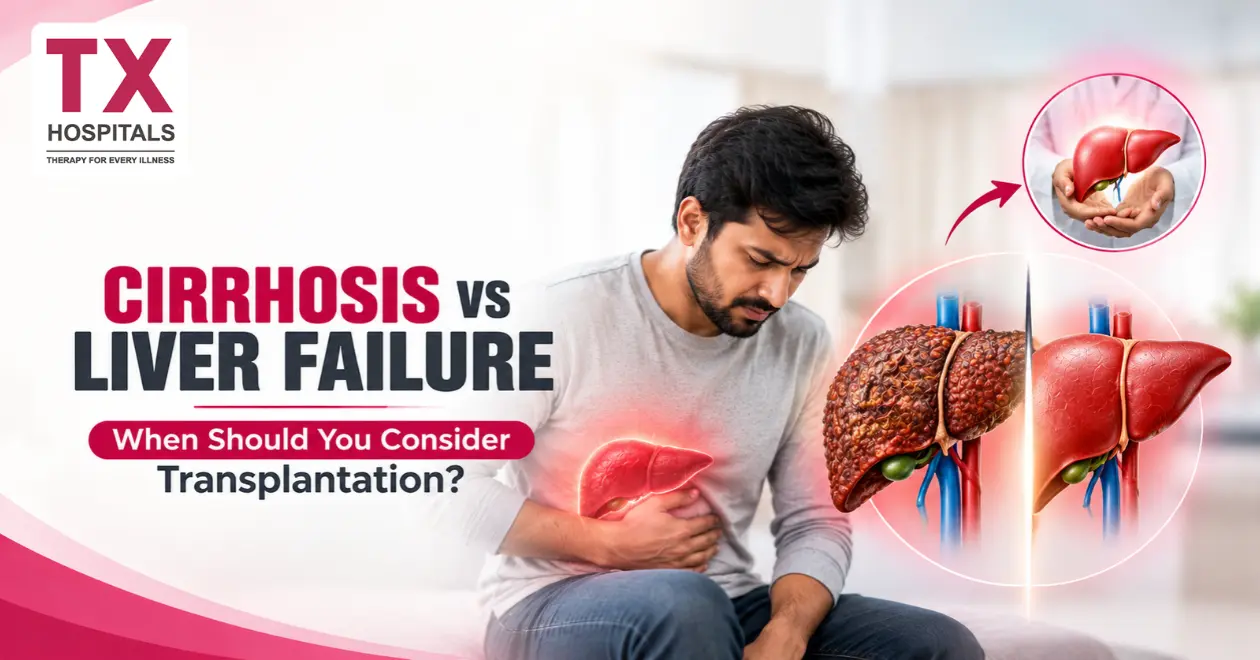
Cirrhosis vs Liver Failure: When Should You Consider Transplantation?
Introduction
Liver problems often develop slowly, and many people may not notice anything unusual in the early stages. Some find out they have liver damage during a routine health check-up, while others experience symptoms such as tiredness, swelling or yellowing of the eyes.
Two serious liver conditions that people often confuse are liver cirrhosis and liver failure. Although they are closely related, they are not the same.
Having cirrhosis doesn't always mean your liver has stopped working. Similarly, not everyone diagnosed with cirrhosis will need a liver transplant.
Understanding the difference between these conditions, their warning signs and when transplantation may be necessary can help patients seek medical care at the right time.
What Is Liver Cirrhosis?
Liver cirrhosis is a condition in which healthy liver tissue gradually gets replaced by scar tissue.
The liver normally helps remove toxins, process nutrients, produce important proteins and support digestion. When it is repeatedly damaged, scar tissue begins to form, making it harder for the liver to perform these functions.
Some common reasons why liver cirrhosis develops include:
- Drinking too much alcohol over a long period
- Long-term hepatitis B or hepatitis C infections
- Fatty liver disease that leads to liver inflammation and scarring
- Conditions where the immune system attacks the liver
- Liver problems passed down through families
- Damage to the bile ducts over time
As cirrhosis progresses, some patients may need a liver transplant. Patients seeking the best liver transplant hospital in Banjara Hills, Hyderabad, can consult specialists at TX Hospitals to understand their liver condition and available treatment options.
What Is Liver Failure?
Liver failure happens when the liver can no longer perform its essential functions properly.
Unlike early cirrhosis, liver failure can affect several parts of the body because the liver is unable to remove toxins, produce enough proteins or maintain normal blood clotting.
There are two main types of liver failure.
1. Acute Liver Failure
Acute liver failure develops suddenly, sometimes within days or weeks, in a person who did not previously have cirrhosis.
It may happen due to severe medication-related liver injury, viral infections or other serious conditions.
Acute liver failure is a medical emergency and requires immediate hospital care.
2. Chronic Liver Failure
Chronic liver failure develops gradually, usually due to long-standing liver disease.
Advanced cirrhosis is one of the most common causes. As liver damage progresses, patients may develop fluid accumulation, jaundice, confusion or internal bleeding.
In some cases, a liver transplant may become necessary.
What Are the Warning Signs of Advanced Liver Disease?
As liver disease progresses, the body may begin showing signs that the liver is struggling to work properly.
Some common warning signs include:
- Yellow eyes or skin: Your eyes or skin may turn yellow.
- Swollen belly: Your stomach may look bigger due to fluid buildup.
- Swollen legs: Your feet and ankles may swell.
- Feeling tired: You may feel tired even after resting.
- Easy bruising or bleeding: You may get bruises or bleed easily.
- Confusion or sleepiness: You may feel confused or sleepy more than usual.
- Vomiting blood or black stools: These can be signs of internal bleeding and need immediate medical care.
Symptoms such as vomiting blood, black stools, sudden confusion or severe drowsiness require immediate emergency medical attention.
When Should You Consider a Liver Transplant?
A liver transplant is not recommended for everyone with cirrhosis. Doctors usually consider transplantation when liver disease becomes advanced and medical treatment can no longer control the complications effectively.
Some situations where a liver transplant evaluation may be needed include:
1. Decompensated Liver Cirrhosis
In the early stages, the liver may continue functioning despite scarring. This is called compensated cirrhosis.
When complications such as ascites, jaundice, bleeding or hepatic encephalopathy develop, it is known as decompensated cirrhosis.
Patients with decompensated cirrhosis should generally be evaluated for liver transplantation.
2. Repeated Fluid Accumulation in the Abdomen
Ascites is a common complication of advanced cirrhosis.
When fluid keeps returning despite treatment, or becomes difficult to control, doctors may recommend a liver transplant evaluation.
3. Recurrent Hepatic Encephalopathy
When the liver cannot remove toxins properly, they may affect the brain.
Patients may experience confusion, memory problems, changes in behaviour or excessive sleepiness.
Repeated episodes despite appropriate treatment may indicate the need for transplant evaluation.
4. Repeated Internal Bleeding
Advanced cirrhosis can increase pressure in the veins supplying the liver, a condition called portal hypertension.
This may cause enlarged veins in the food pipe or stomach, which can rupture and bleed.
Recurrent bleeding, particularly alongside other complications, may lead doctors to consider transplantation.
5. Certain Cases of Liver Cancer
Some patients with liver cancer may be eligible for transplantation, especially when the tumour is limited to the liver and meets specific medical criteria.
The decision depends on tumour size, number, spread and overall health.
6. Acute Liver Failure
Patients with severe acute liver failure may need an emergency liver transplant if their liver is unlikely to recover.
If you or a loved one is experiencing serious liver problems, getting medical advice at the right time is important. Patients searching for the best liver transplant doctor in Banjara Hills can consult liver specialists at TX Hospitals to understand their condition, explore treatment options and find out whether a liver transplant is needed.
How Do Doctors Decide Whether You Need a Liver Transplant?
Doctors do not recommend transplantation based on symptoms alone. They assess liver function, complications and the patient's overall health.
Some common evaluations include:
Blood Tests
Blood tests help check bilirubin, albumin, blood clotting and other indicators of liver function.
MELD Score
The Model for End-Stage Liver Disease (MELD) score helps doctors assess the severity of advanced liver disease and the urgency of transplantation.
A higher score generally indicates more severe disease, although complications can justify transplant evaluation even with a lower score.
Imaging Tests
Ultrasound, CT scans or MRI scans may be used to assess the liver, blood vessels and possible complications.
Overall Health Assessment
Doctors also evaluate heart function, kidney health, infections, nutritional status and other medical conditions to determine whether transplantation is suitable.
Can Liver Cirrhosis Be Treated Without Transplantation?
Yes. Many patients with cirrhosis do not require a liver transplant, particularly when the condition is diagnosed early.
Treatment depends on the cause and severity of liver damage.
Doctors may recommend:
- Completely avoiding alcohol
- Managing fatty liver disease and related metabolic conditions
- Treating hepatitis B or hepatitis C
- Maintaining a healthy weight
- Following a balanced diet
- Taking prescribed medicines to manage complications
- Attending regular liver check-ups
- Getting screened for liver cancer as recommended
Although established cirrhosis may not completely reverse, treating the underlying cause can sometimes improve liver function and prevent further damage.
When Should You Consult a Liver Specialist?
You should not wait until liver disease becomes severe before seeking medical advice.
If you have been diagnosed with cirrhosis, regular consultations can help monitor liver function and detect complications early.
People experiencing repeated abdominal swelling, jaundice, unusual bleeding or worsening weakness should seek medical evaluation promptly.
For patients with advanced cirrhosis or liver failure, a liver specialist can assess whether a transplant evaluation is needed.
If you are searching for a liver transplant doctor near me, TX Hospitals offers specialist consultations for liver disease assessment, treatment guidance and evaluation of the need for advanced care, including liver transplantation.
Don't Wait Until Liver Damage Becomes Severe
Cirrhosis and liver failure are closely connected, but they do not mean the same thing.
While many people with cirrhosis can manage their condition with treatment and regular monitoring, others may develop complications that require liver transplantation.
The important thing is to recognise worsening symptoms and seek medical advice before serious complications develop.
Early evaluation can help doctors identify the right treatment and determine whether a liver transplant should be considered.
Frequently Asked Questions
Disclaimer
The information provided in this blog is for general health awareness and educational purposes only. It should not be considered a substitute for professional medical advice, diagnosis or treatment. The content may not apply to every individual's health condition. Always consult a qualified healthcare professional for any medical concerns or treatment decisions. Do not ignore or delay medical advice based on the information shared in this blog.
Share this






Book Appointment
Categories
- Health Care
- Mother & Child
- Pediatric
- Health Days
- Urology
- Dental
- Gastroenterology
- Neurology
- Gynecology
- Orthopedics
- Cardiology
- Oncology
- Robotic Sciences
- Nephrology
- Rheumatology
- Pulmonology
- Internal Medicine
- General Medicine
- Gastroeneterology
- Endocrinology
- Dermatology
- Pediatric Urologist
- Ophthalmology
- Gynecologist
- Ophthalmologist
- Ent
- Psychiatry
- Pediatrician
- Health Day
- Orthopaedics
- Spine Surgery
- General Physician
- Awarness Day
- Liver Transplantation Surgery
- internal medicine
- General Surgeries
- Health care
- ENT
- cardiothoracic & vascular surgery
- Pediatric Neurologist
- Gastroenterologist
- Gynecology Hospitals
- oncology
- Trauma Surgeons
- Neuro Sciences
- Internal Madicine
- cardiac sciences
- Genecology
- Dietician
- Diabetology