EBUS Bronchoscopy: How Doctors Evaluate Lung and Chest Lymph Nodes
When a scan shows enlarged lymph nodes in the chest or an unusual area in the lungs, doctors may need to know exactly what is causing it. Sometimes, imaging alone cannot provide a definite answer. This is where EBUS bronchoscopy can be useful.
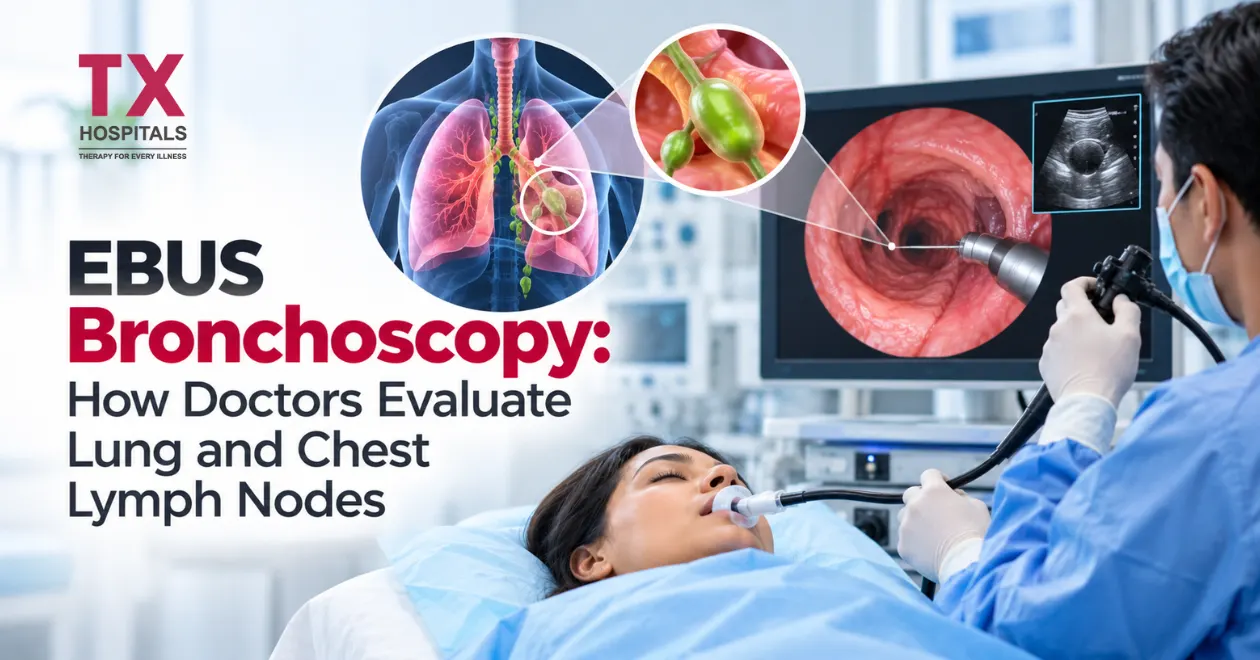
EBUS or Endobronchial Ultrasound, is a minimally invasive procedure that helps doctors examine areas around the airways and collect tissue samples from lymph nodes in the chest. It is commonly used when evaluating conditions such as lung cancer, infections and other chest abnormalities.
What Is EBUS Bronchoscopy?
EBUS bronchoscopy combines bronchoscopy with ultrasound imaging.
During the procedure, a thin, flexible bronchoscope with a small ultrasound probe is gently passed through the mouth or nose into the airways. The ultrasound helps the doctor see structures located just outside the airways, including certain lymph nodes.
If a suspicious lymph node or tissue area is identified, the doctor can use a fine needle through the bronchoscope to collect a small sample. This is called transbronchial needle aspiration (TBNA).
The sample can then be sent to a laboratory for further testing.
Why do Doctors recommend EBUS?
EBUS may be recommended when doctors need more information about an abnormality seen on a chest X-ray, CT scan or other imaging test.
Some common reasons include:
- Checking enlarged lymph nodes in the chest
- Evaluating a suspected lung tumour
- Finding out whether lung cancer has spread to nearby lymph nodes
- Investigating unexplained masses or abnormalities near the airways
- Diagnosing certain infections
- Helping determine the stage of lung cancer
EBUS helps doctors check deeper areas of the chest and collect tissue samples safely. At TX Hospitals, one of the best lung hospitals in Hyderabad, EBUS is used to help diagnose lung and chest problems.
What Can EBUS Detect?
EBUS is particularly helpful for examining lymph nodes located around the lungs and central chest, especially those that can be reached from the airways.
The tissue collected during the procedure may help doctors identify:
- Lung cancer
- Spread of cancer to lymph nodes
- Certain infections
- Inflammatory conditions
- Other abnormal tissue changes
The sample may also provide important information about the type of cancer and, in some cases, help guide further treatment decisions.
EBUS for Lung Cancer Staging
One important use of EBUS is lung cancer staging.
When lung cancer is suspected or already diagnosed, doctors need to understand whether cancer has spread to nearby lymph nodes. This information can influence treatment planning.
EBUS allows doctors to sample selected lymph nodes without making a large surgical incision. Depending on the situation, EBUS may be used along with other imaging tests or procedures to get a clearer picture of the disease.
EBUS vs Traditional Bronchoscopy
Traditional bronchoscopy mainly allows doctors to look inside the airways and collect samples from areas that can be reached directly.
EBUS adds ultrasound imaging, allowing doctors to identify certain structures outside the airway walls, particularly nearby lymph nodes.
This makes EBUS especially useful when the abnormal area is not visible simply by looking inside the airways.
Are there any Risks?
EBUS is generally considered a safe procedure when performed by an experienced medical team. However, like any medical procedure, it can have some risks.
Possible complications may include:
- Temporary sore throat or cough
- Minor bleeding
- Infection
- Breathing difficulties
- Fever
- Rarely, a collapsed lung or other complications
The doctor will explain the possible risks and benefits before the procedure.
When Might your Doctor Suggest EBUS?
EBUS may be suggested when a scan shows enlarged lymph nodes, a lung mass, or another abnormality that needs further testing.
At TX Hospitals, with some of the top pulmonologists in Hyderabad, EBUS is used to help diagnose lung and chest conditions and guide treatment planning.
Get the Right Evaluation for Lung and Chest Conditions
Finding an abnormality on a lung scan can naturally cause concern, but an abnormal scan does not always mean cancer. Procedures such as EBUS bronchoscopy can help doctors look more closely at suspicious areas and obtain tissue samples for a clearer diagnosis.
If your doctor has recommended EBUS, discuss the reason for the procedure, how you should prepare, possible risks and when you can expect the results. Getting the right diagnosis is an important first step toward choosing the appropriate treatment.
Looking for expert evaluation of lung and chest conditions? Consult a pulmonologist to understand whether EBUS bronchoscopy is suitable for you.
Frequently Asked Questions
Disclaimer
The information provided in this blog is for general health awareness and educational purposes only. It should not be considered a substitute for professional medical advice, diagnosis or treatment. The content may not apply to every individual's health condition. Always consult a qualified healthcare professional for any medical concerns or treatment decisions. Do not ignore or delay medical advice based on the information shared in this blog.
Share this






Book Appointment
Categories
- Health Care
- Mother & Child
- Pediatric
- Health Days
- Urology
- Dental
- Gastroenterology
- Neurology
- Gynecology
- Orthopedics
- Cardiology
- Oncology
- Robotic Sciences
- Nephrology
- Rheumatology
- Pulmonology
- Cardiothoracic & Vascular Surgery
- Internal Medicine
- General Medicine
- Gastroeneterology
- Endocrinology
- Dermatology
- Psychiatry
- Pediatric Urologist
- Ophthalmology
- Gynecologist
- Ophthalmologist
- Ent
- Pediatrician
- Health Day
- Orthopaedics
- Spine Surgery
- General Physician
- Health Awareness
- Awarness Day
- Liver Transplantation Surgery
- Robotic Gastrointestinal (GI) Surgery
- Cardiac Sciences
- internal medicine
- ENT
- General Surgeries
- Vascular Specialist
- Health care
- cardiothoracic & vascular surgery
- Pediatric Neurologist
- Gastroenterologist
- Gynecology Hospitals
- oncology
- Trauma Surgeons
- Neuro Sciences
- Internal Madicine
- cardiac sciences
- Genecology
- Dietician
- Diabetology