Exercise-Induced Asthma: Understanding Breathing Problems During Exercise
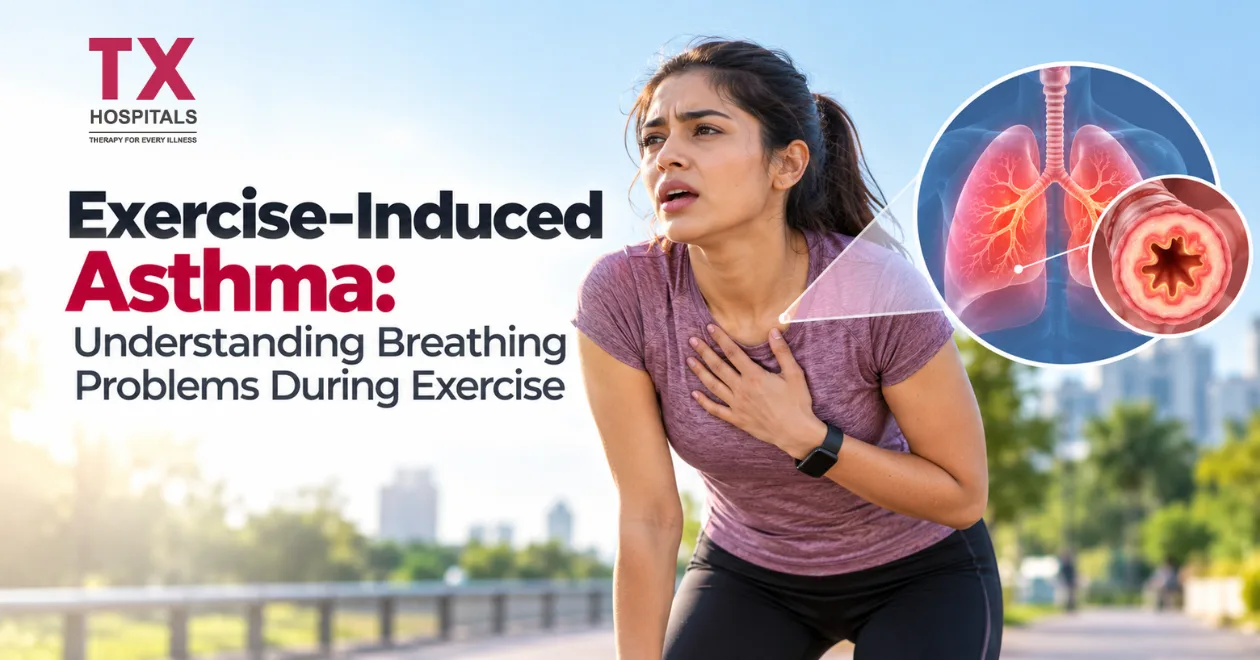
Exercise keeps us healthy and active, but some people may experience coughing, wheezing, chest tightness or breathing difficulty during or after workouts. These symptoms can be a sign of exercise-induced asthma, also known as exercise-induced bronchoconstriction (EIB).
During exercise, we breathe faster and, in some people, the airways can become narrow for a short time. This makes breathing harder and may cause discomfort while exercising.
At TX Hospitals, our respiratory specialists provide expert care for asthma, breathing problems and other lung conditions to help patients manage symptoms and stay active.
What Is Exercise-Induced Asthma?
Exercise-induced asthma occurs when physical activity triggers narrowing of the airways. During workouts, people tend to breathe faster and often through the mouth, allowing cooler and drier air to reach the lungs.
When your airways become sensitive during exercise, they may tighten and make breathing feel difficult. You might notice things like:
- Feeling out of breath quickly
- A tight or heavy feeling in your chest
- Wheezing while breathing
- Coughing during or after a workout
- Getting tired sooner than usual
- Not being able to exercise at your normal pace
These symptoms usually come on while exercising or shortly after you stop.
Why do Breathing Problems Happen During Workouts?
During exercise, your body requires more oxygen, so your breathing rate increases. For some people, this rapid breathing can trigger airway sensitivity.
Common reasons include:
1. Dry or Cold Air
Cold and dry air can irritate the airway lining. This may cause the muscles around the airways to tighten, making breathing difficult.
2. Increased Breathing Rate
Intense workouts increase airflow through the lungs. If the airways are sensitive, this can trigger inflammation and narrowing.
3. Underlying Asthma
Some people may not notice asthma symptoms in their daily life but experience breathing problems only during exercise. Physical activity can sometimes bring out this hidden airway sensitivity.
4. Environmental Triggers
When exercising outdoors, your lungs may come in contact with triggers like:
- Dust
- Pollution
- Pollen
- Smoke
- Allergens
These can irritate the airways and make breathing problems more likely during workouts.
Common Symptoms of Exercise-Induced Asthma
Symptoms can be different for each person. Some may feel only mild discomfort, while others may find it harder to breathe during or after exercise.
You may notice symptoms like:
- Coughing during or after exercise
- A whistling sound while breathing
- A tight feeling in your chest
- Feeling breathless and needing more time to recover
- Getting tired quickly during workouts
- Finding it harder to maintain your usual activity level
- Avoiding exercise because of breathing discomfort
Children may avoid sports or feel tired quickly due to breathing difficulties. At TX Hospitals, one of the best pulmonology hospitals in Hyderabad, we provide expert asthma and lung care for better breathing.
Who is More Likely to Develop Exercise-Induced Asthma?
Exercise-induced asthma can happen to anyone, but some people may be more prone to it, especially those who have:
- Asthma or allergy problems
- Sensitive airways that react easily
- A family history of asthma or breathing issues
- Exposure to air pollution
- Frequent respiratory infections
- Poorly controlled asthma symptoms
Athletes, children and people who perform high-intensity workouts may also experience symptoms.
How is Exercise-Induced Asthma Diagnosed?
A doctor may begin with a detailed discussion about symptoms, exercise patterns, and medical history.
Diagnosis may include:
Lung Function Tests
A spirometry test measures how well your lungs work and checks airflow limitation.
Exercise Challenge Test
This test evaluates how your lungs respond before and after physical activity.
Bronchodilator Test
Doctors may check whether breathing improves after using medication that relaxes airway muscles.
Allergy Evaluation
If allergies are suspected, additional tests may help identify possible triggers.
Early diagnosis helps prevent symptoms from interfering with exercise and daily activities.
Tips to Prevent Breathing Problems During Workouts
You can lower the chances of breathing problems during workouts by following a few simple steps:
- Start with a proper warm-up before intense exercise
- Take your asthma medicines as advised by your doctor
- Keep your prescribed inhaler with you if recommended
- Try to exercise in areas with clean air
- Avoid outdoor workouts when pollution or pollen levels are high
- Drink enough water to stay hydrated
- Pay attention to your body and stop if breathing becomes difficult
When Should You See a Doctor?
Consult a respiratory specialist if you experience:
- Frequent coughing during exercise
- Wheezing or chest tightness
- Difficulty completing normal workouts
- Breathing problems that continue after exercise
- Symptoms affecting sports, fitness, or daily activities
Do not ignore breathing problems during exercise. At TX Hospitals, with Top Lung specialists in Hyderabad, we provide expert care for asthma and breathing conditions.
Stay Active With Better Breathing Support
Exercise should improve your health, not leave you struggling to breathe. If workouts regularly cause coughing, wheezing or chest discomfort, timely evaluation can help identify the cause and improve your quality of life.
TX Hospitals, Hyderabad, offers expert respiratory care with advanced facilities and specialist guidance for asthma and breathing-related conditions.
Book an appointment today and take the right step towards healthier breathing.
Frequently Asked Questions
Disclaimer
The information provided in this blog is for general health awareness and educational purposes only. It should not be considered a substitute for professional medical advice, diagnosis or treatment. The content may not apply to every individual's health condition. Always consult a qualified healthcare professional for any medical concerns or treatment decisions. Do not ignore or delay medical advice based on the information shared in this blog.
Share this






Book Appointment
Categories
- Health Care
- Mother & Child
- Pediatric
- Health Days
- Urology
- Dental
- Gastroenterology
- Neurology
- Gynecology
- Orthopedics
- Cardiology
- Oncology
- Robotic Sciences
- Nephrology
- Rheumatology
- Pulmonology
- Cardiothoracic & Vascular Surgery
- Internal Medicine
- General Medicine
- Gastroeneterology
- Endocrinology
- Dermatology
- Pediatric Urologist
- Ophthalmology
- Gynecologist
- Ophthalmologist
- Ent
- Psychiatry
- Pediatrician
- Health Day
- Orthopaedics
- Spine Surgery
- General Physician
- Awarness Day
- Liver Transplantation Surgery
- Robotic Gastrointestinal (GI) Surgery
- Cardiac Sciences
- internal medicine
- General Surgeries
- Health care
- ENT
- cardiothoracic & vascular surgery
- Pediatric Neurologist
- Gastroenterologist
- Gynecology Hospitals
- oncology
- Trauma Surgeons
- Neuro Sciences
- Internal Madicine
- cardiac sciences
- Genecology
- Dietician
- Diabetology