Hidden Nutritional Deficiencies in Children With Normal Body Weight
Introduction
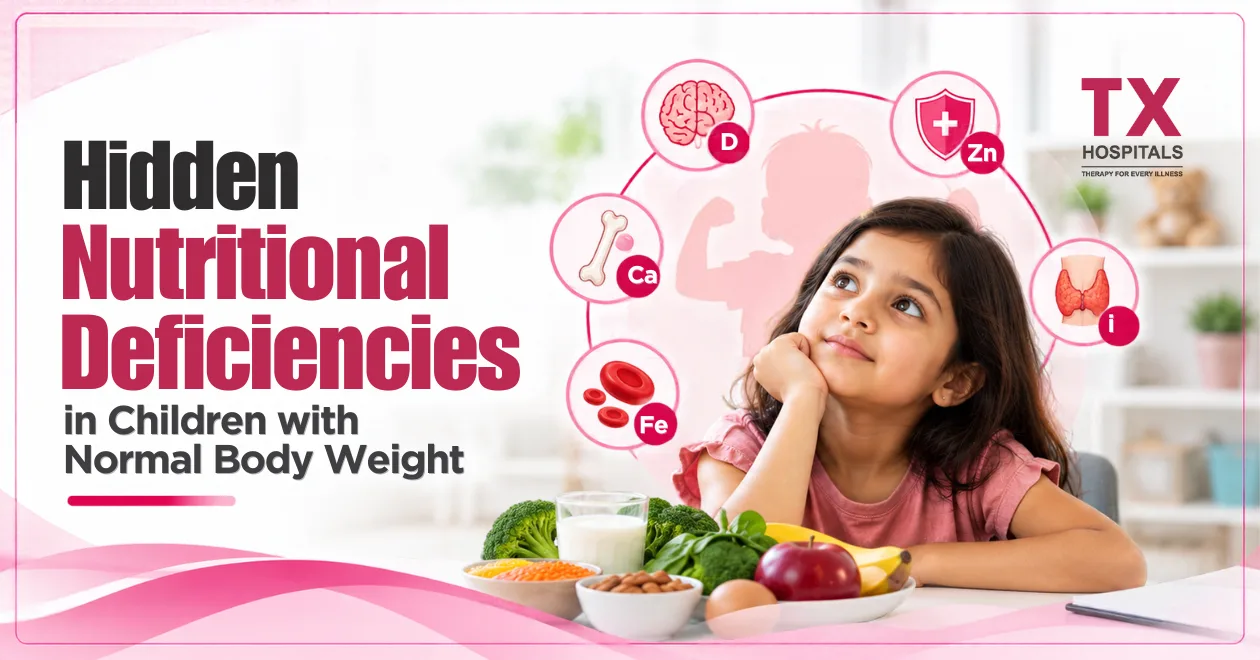
A child can look healthy, maintain a normal body weight and still be low in important vitamins and minerals. This is more common than many parents realise.
Weight only tells part of the story. A child may be getting enough calories but not enough iron, vitamin D, vitamin B12, calcium, protein or other nutrients needed for healthy growth and development.
At TX Children’s Hospital, paediatric care focuses not only on height and weight but also on nutrition, growth, immunity and overall development.
Normal Weight Does Not Always Mean Complete Nutrition
Children today have easy access to packaged foods, sugary snacks, refined foods and quick meals. These foods may provide enough calories to maintain normal weight but may not provide the nutrients needed for proper growth.
A child can therefore appear completely healthy while slowly developing a nutritional deficiency.
Poor food variety, picky eating and frequent junk food are some of the common reasons behind these hidden deficiencies.
Common Nutritional Deficiencies in Children
Some nutrients are especially important during childhood because the body and brain are developing rapidly.
Iron Deficiency
Iron supports healthy blood and brain development.
Low iron levels may lead to:
- Tiredness
- Pale skin
- Low energy
- Poor concentration
- Irritability
- Weakness
Iron deficiency may develop gradually and can sometimes be present even before anaemia becomes severe.
Vitamin D Deficiency
Vitamin D plays an important role in bone strength, muscle health and immunity.
Low vitamin D levels may be linked with:
- Bone or leg pain
- Muscle weakness
- Tiredness
- Poor bone strength
- Growth concerns in some children
Limited sunlight exposure and low intake of vitamin D-rich foods can contribute to deficiency.
Vitamin B12 Deficiency
Vitamin B12 is needed for healthy nerves and blood cells.
Children with low vitamin B12 may experience:
- Weakness
- Low appetite
- Tiredness
- Poor concentration
- Tingling or numbness in some cases
Children following very limited or restrictive diets may need closer nutritional monitoring.
Calcium Deficiency
Calcium is important for strong bones and teeth, especially during growing years.
Children who consume very little milk, curd, paneer or other calcium-rich foods may not get enough calcium through their daily diet.
Over time, this may affect healthy bone development.
Protein Deficiency
Protein supports muscle growth, tissue repair, immunity and overall development.
Even children with a normal body weight may have low protein intake if their diet mainly contains refined carbohydrates, snacks and low-protein foods.
Why Hidden Deficiencies Develop
Nutritional deficiencies can develop slowly because of daily eating habits.
Common reasons include:
- Picky eating
- Skipping meals
- Eating the same foods every day
- Too many packaged snacks
- Low fruit and vegetable intake
- Low protein intake
- Food allergies or dietary restrictions
- Digestive or absorption problems
- Rapid growth during childhood and adolescence
A child may grow normally but still lack important nutrients. TX Hospitals, one of the best pediatric hospitals in Hyderabad, offers expert pediatric care to support healthy growth.
Small Signs Parents May Notice
Hidden nutritional deficiencies do not always cause major symptoms in the beginning.
Some children may simply seem more tired than usual or show changes in eating, activity or concentration.
Parents may notice:
- Low energy
- Pale skin
- Poor appetite
- Frequent tiredness
- Difficulty concentrating
- Irritability
- Frequent infections
- Hair fall
- Brittle nails
- Muscle weakness
- Bone or leg pain
- Changes in growth
These symptoms can have many causes, so proper medical evaluation is important.
Looking Beyond the Weighing Scale
Checking only a child's weight may not give a complete picture of nutritional health.
Paediatricians also consider:
- Height
- Growth pattern
- Diet
- Eating habits
- Development
- Physical activity
- Medical history
- Signs of vitamin or mineral deficiency
If needed, blood tests may be suggested to check haemoglobin, iron, vitamin D, vitamin B12 and other nutrient levels. TX Hospitals has top children's specialists in Hyderabad who assess each child’s growth and nutritional needs.
Building Better Nutrition Every Day
A healthy diet does not need to be complicated.
Children should regularly get a mix of:
- Fruits
- Vegetables
- Whole grains
- Milk and dairy products
- Eggs
- Pulses and lentils
- Nuts and seeds when suitable for age
- Fish or meat, if included in the family diet
- Healthy fats
Instead of focusing only on how much a child eats, parents should also look at the variety and quality of food.
Small changes, such as adding one fruit, one protein source and one vegetable to daily meals, can make a meaningful difference over time.
Regular Growth and Nutrition Checks Matter
Children grow quickly, and their nutritional needs change with age.
Regular paediatric check-ups can help track growth and identify concerns early, especially in children who are picky eaters, avoid certain food groups or frequently complain of tiredness and weakness.
Early nutritional assessment can also help prevent deficiencies from affecting learning, immunity, bone health and overall development.
Complete Nutrition & Growth Support for Children
At TX Children’s Hospital, paediatricians provide complete growth and nutrition assessment for infants, children and adolescents.
Depending on the child’s needs, care may include nutritional evaluation, growth monitoring, blood tests, dietary advice and treatment for identified vitamin or mineral deficiencies.
The focus is not only on maintaining a healthy weight, but also on supporting healthy growth, stronger immunity, better energy and overall development.
Give Your Child the Right Nutrition for Healthy Growth
A normal body weight does not always mean a child is getting complete nutrition.
The quality of food, variety in the diet and regular growth monitoring are equally important.
Paying attention to small changes in energy, appetite, concentration and growth can help detect nutritional problems early.
Healthy growth is about more than weight. Good nutrition matters at every stage of childhood.
For paediatric consultations at TX Children’s Hospital, call +91 91445 14459.
Frequently Asked Questions
Disclaimer
The information provided in this blog is for general health awareness and educational purposes only. It should not be considered a substitute for professional medical advice, diagnosis or treatment. The content may not apply to every individual's health condition. Always consult a qualified healthcare professional for any medical concerns or treatment decisions. Do not ignore or delay medical advice based on the information shared in this blog.
Share this






Book Appointment
Categories
- Health Care
- Mother & Child
- Pediatric
- Health Days
- Urology
- Dental
- Gastroenterology
- Neurology
- Gynecology
- Orthopedics
- Cardiology
- Oncology
- Robotic Sciences
- Nephrology
- Rheumatology
- Pulmonology
- Cardiothoracic & Vascular Surgery
- Internal Medicine
- General Medicine
- Gastroeneterology
- Endocrinology
- Dermatology
- Pediatric Urologist
- Ophthalmology
- Gynecologist
- Ophthalmologist
- Ent
- Psychiatry
- Pediatrician
- Health Day
- Orthopaedics
- Spine Surgery
- General Physician
- Health Awareness
- Awarness Day
- Liver Transplantation Surgery
- Robotic Gastrointestinal (GI) Surgery
- Cardiac Sciences
- internal medicine
- ENT
- General Surgeries
- Health care
- cardiothoracic & vascular surgery
- Pediatric Neurologist
- Gastroenterologist
- Gynecology Hospitals
- oncology
- Trauma Surgeons
- Neuro Sciences
- Internal Madicine
- cardiac sciences
- Genecology
- Dietician
- Diabetology