Does a Robot Perform the Surgery? Understanding How Robotic Surgery Works
Introduction
When you hear the term robotic surgery, you might imagine a robot standing beside the operating table and performing the entire operation on its own. It sounds like something from a science fiction movie, doesn't it?
But that's not how robotic surgery works.
In reality, robotic surgery is performed by a trained surgeon who controls the robotic system throughout the procedure. The robot does not make decisions or operate independently. Instead, it helps the surgeon perform certain surgical movements with greater precision and control.
Robotic-assisted surgery is now used for several procedures, including some urological, gynaecological, gastrointestinal and cancer surgeries.
Let's understand how this technology works, what happens during the procedure and whether robotic surgery is suitable for everyone.
What Is Robotic Surgery?
Robotic surgery, also called robotic-assisted surgery, is a surgical technique in which doctors use a robotic system to perform an operation.
Unlike traditional open surgery, which often requires a larger incision, many robotic procedures are performed through small cuts in the body.
The robotic system usually includes:
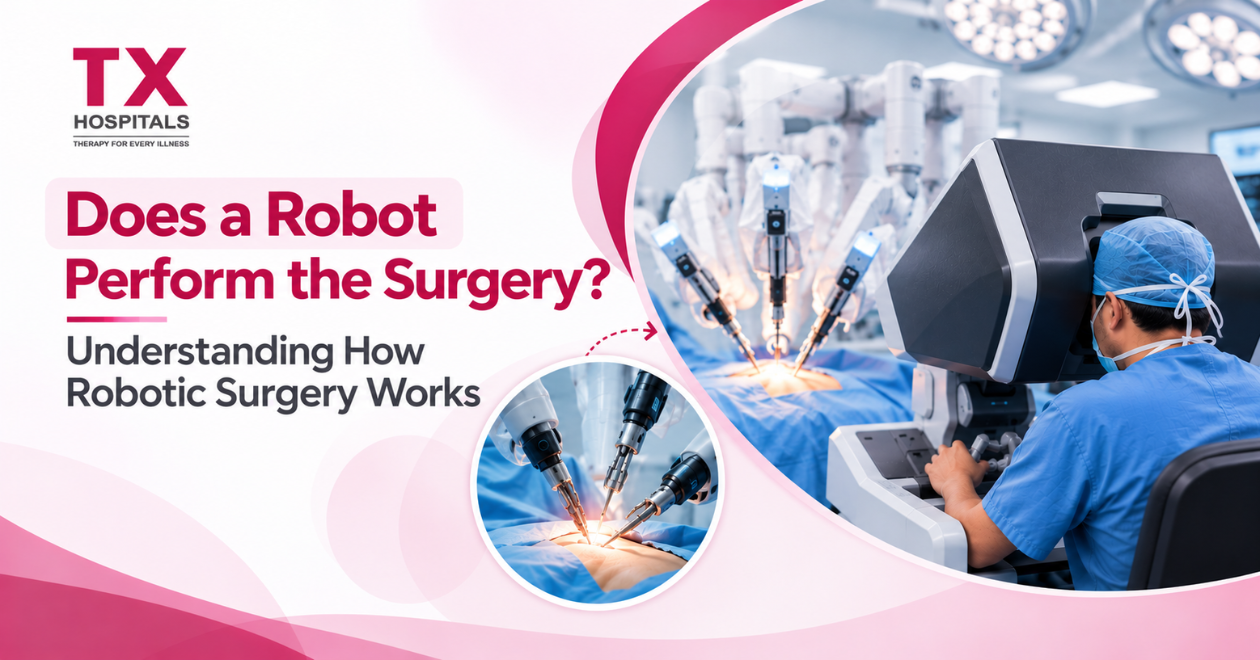
- Surgeon's console: The place where the surgeon sits and controls the robotic instruments.
- Robotic arms: These hold and move the surgical instruments based on the surgeon's commands.
- 3D camera: Provides a magnified, detailed view of the surgical area.
- Special surgical instruments: Small instruments designed to move inside the body with flexibility and control.
The technology helps surgeons work in areas that may be difficult to reach using conventional surgical instruments.
Does a Robot Actually Perform the Surgery?
No. A robot does not perform the surgery on its own.
This is one of the most common misunderstandings about robotic surgery.
During the procedure, the surgeon remains in complete control of the robotic system.
Here's what actually happens:
- The surgeon sits at a console near the operating table.
- A high-definition 3D camera provides a detailed view of the surgical area.
- The surgeon uses hand and foot controls to operate the robotic instruments.
- The robotic arms translate the surgeon's movements into precise actions inside the patient's body.
- The surgical team monitors the patient throughout the operation.
The robot does not operate on its own. Every step is controlled by the surgeon, while the robotic system helps with precise movements.
How Does Robotic Surgery Work? Step by Step
Although the exact process depends on the type of surgery, most robotic-assisted procedures follow a similar approach.
1. Preparing the Patient
Before surgery, doctors review the patient's medical history, symptoms, test results and overall health.
Blood tests, imaging scans and other investigations may be recommended depending on the condition.
The surgical team also explains the procedure, possible risks and expected recovery.
2. Giving Anaesthesia
Most robotic-assisted surgeries are performed under general anaesthesia.
This means the patient remains asleep and does not feel pain during the operation.
The anaesthesia team monitors breathing, heart rate, blood pressure and other vital signs.
3. Making Small Incisions
The surgeon usually makes a few small cuts in the abdomen or the area being treated.
A camera and specialised surgical instruments are inserted through these openings.
However, some procedures may require a larger incision to remove tissue or an organ.
4. Controlling the Robotic Arms
The surgeon operates the robotic instruments from a console.
The system translates the surgeon's hand movements into controlled movements of the instruments.
The magnified 3D view helps the surgeon see tissues, blood vessels and surrounding structures more clearly.
5. Completing the Surgery
Once the procedure is completed, the instruments are removed and the incisions are closed.
The patient is then moved to the recovery area for monitoring.
The duration of surgery and hospital stay depend on the procedure and the patient's condition.
What Types of Surgeries Can Be Performed Using Robotic Technology?
Robotic-assisted technology is used across several surgical specialities. However, not every procedure requires or benefits from a robotic approach.
Some commonly performed robotic-assisted procedures include:
1. Urological Surgeries
- Prostate removal for prostate cancer
- Partial or complete kidney removal
- Certain urinary tract reconstruction procedures
2. Gynaecological Surgeries
- Hysterectomy
- Myomectomy for uterine fibroids
- Selected endometriosis surgeries
3. Gastrointestinal and General Surgeries
- Certain colorectal surgeries
- Selected hernia repairs
- Some gastrointestinal procedures
4. Cancer Surgeries
- Prostate cancer surgery
- Selected kidney cancer procedures
- Certain colorectal and gynaecological cancer surgeries
5. Orthopaedic Surgeries
- Total knee replacement surgery
- Hip replacement surgery
- Partial knee replacement surgery
The choice of surgical technique depends on the patient's condition, overall health and the surgeon's assessment.
At TX Hospitals, patients exploring robotic surgery hospitals in Hyderabad can consult specialists to understand whether robotic surgery is suitable for their condition.
What Are the Benefits of Robotic Surgery?
Robotic-assisted surgery may offer certain advantages compared with traditional open surgery, particularly when a minimally invasive approach is appropriate.
Possible benefits include:
- Smaller incisions: Many procedures can be performed through small cuts rather than a large opening.
- Less blood loss: Some robotic procedures may involve less bleeding than open surgery.
- Reduced postoperative pain: Smaller incisions may result in less discomfort during recovery.
- Shorter hospital stay: Some patients may be able to return home sooner.
- Better surgical visibility: The magnified 3D camera helps surgeons view the operating area in detail.
- Faster return to daily activities: Recovery may be quicker for certain procedures compared with open surgery.
However, these benefits are not guaranteed for every patient.
The outcome depends on the type of operation, the surgeon's experience, the patient's health and whether robotic surgery is the most appropriate approach.
Is Robotic Surgery Safer Than Traditional Surgery?
Robotic surgery can be a safe and effective option for many patients when performed by an appropriately trained surgical team.
However, it is important to understand that robotic surgery is not automatically safer than open or conventional laparoscopic surgery.
Like any surgical procedure, it carries certain risks, including:
- Bleeding
- Infection
- Injury to nearby organs or tissues
- Anaesthesia-related complications
- Blood clots
- Need to switch to open surgery during the procedure
The risks vary depending on the operation and the patient's medical condition.
For some procedures, robotic surgery may offer advantages over open surgery. For others, conventional laparoscopy or open surgery may be equally suitable or preferable.
The surgeon's experience and the patient's individual needs remain important factors in choosing the right approach.
Who Is a Suitable Candidate for Robotic Surgery?
Not everyone needs robotic surgery.
Doctors consider several factors before recommending it, including:
- Type and severity of the disease
- Location of the affected organ
- Previous abdominal or pelvic surgeries
- Age and overall health
- Existing medical conditions
- Expected benefits and risks
- Availability of the required surgical expertise
Some patients may benefit more from conventional laparoscopic or open surgery.
Consulting an experienced best robotic surgeons in Banjara Hills at TX Hospitals can help patients understand the available surgical options and choose an approach based on their medical needs.
How Long Does It Take to Recover After Robotic Surgery?
Recovery time varies depending on the type of surgery performed.
For certain minimally invasive procedures, patients may be able to walk within a day and return home after a short hospital stay.
However, more complex operations may require longer hospitalization and several weeks of recovery.
During recovery, patients are usually advised to:
- Take prescribed medicines as directed.
- Keep the surgical wounds clean and dry.
- Avoid lifting heavy objects until the surgeon permits it.
- Walk regularly as recommended.
- Attend scheduled follow-up appointments.
- Report fever, worsening pain, unusual bleeding or wound discharge.
Patients should follow their surgeon's instructions rather than assume that all robotic procedures have the same recovery time.
Understanding Robotic Surgery at TX Hospitals
Robotic surgery combines advanced surgical technology with the skills and judgement of an experienced surgeon. Although robotic systems can assist with precision, visibility and instrument control, the surgeon remains responsible for the entire procedure.
Patients exploring robotic-assisted surgery in Banjara Hills should understand the available treatment options, possible benefits and risks before making a decision.
At TX Hospitals, patients can seek surgical consultations to discuss their condition and understand whether a minimally invasive, robotic-assisted or conventional surgical approach may be appropriate.
The most important factor is not simply the technology used, but choosing the right procedure for the patient's medical needs.
Frequently Asked Questions
Disclaimer
The information provided in this blog is for general health awareness and educational purposes only. It should not be considered a substitute for professional medical advice, diagnosis or treatment. The content may not apply to every individual's health condition. Always consult a qualified healthcare professional for any medical concerns or treatment decisions. Do not ignore or delay medical advice based on the information shared in this blog.
Share this






Book Appointment
Categories
- Health Care
- Mother & Child
- Pediatric
- Health Days
- Urology
- Dental
- Gastroenterology
- Neurology
- Gynecology
- Orthopedics
- Cardiology
- Oncology
- Robotic Sciences
- Nephrology
- Rheumatology
- Pulmonology
- Cardiothoracic & Vascular Surgery
- Internal Medicine
- General Medicine
- Gastroeneterology
- Endocrinology
- Dermatology
- Pediatric Urologist
- Ophthalmology
- Gynecologist
- Ophthalmologist
- Ent
- Psychiatry
- Pediatrician
- Health Day
- Orthopaedics
- Spine Surgery
- General Physician
- Health Awareness
- Awarness Day
- Liver Transplantation Surgery
- Robotic Gastrointestinal (GI) Surgery
- Cardiac Sciences
- internal medicine
- ENT
- General Surgeries
- Health care
- cardiothoracic & vascular surgery
- Pediatric Neurologist
- Gastroenterologist
- Gynecology Hospitals
- oncology
- Trauma Surgeons
- Neuro Sciences
- Internal Madicine
- cardiac sciences
- Genecology
- Dietician
- Diabetology