International Trigeminal Neuralgia Awareness Day 2026: Could Your Facial Pain Be Nerve-Related?
Introduction
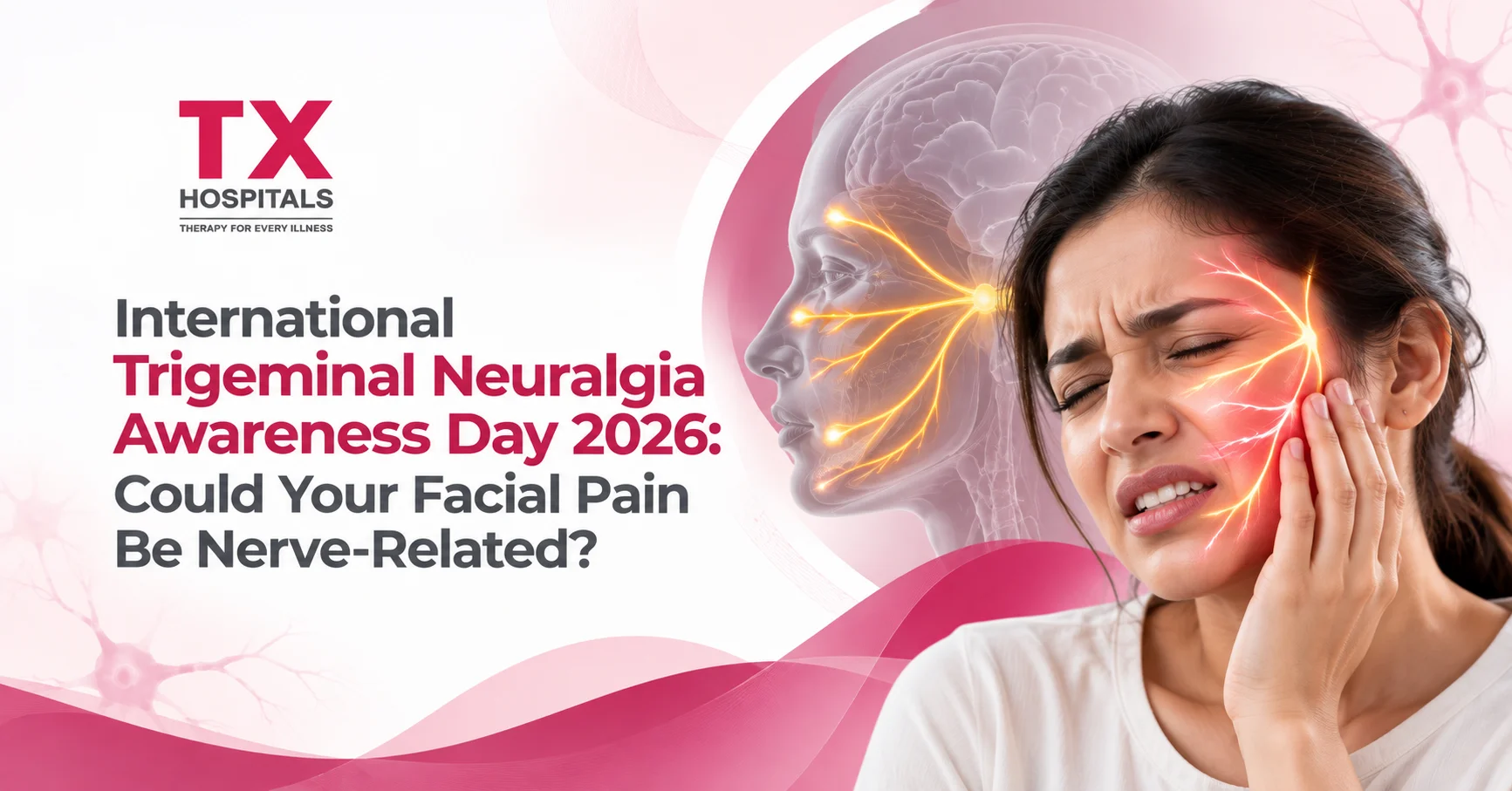
A sudden, sharp pain across your cheek or jaw can easily make you think something is wrong with your teeth. But when the pain feels like an electric shock, keeps coming back or is triggered by simple activities like eating or brushing your teeth, it could be related to a facial nerve.
International Trigeminal Neuralgia Awareness Day 2026, observed on October 7, is a time to raise awareness about trigeminal neuralgia and help more people understand this often misunderstood cause of facial pain.
Knowing what the pain feels like and what can trigger it may help people recognise when recurring facial pain needs medical attention.
What Is Trigeminal Neuralgia?
Trigeminal neuralgia is a chronic pain condition that affects the trigeminal nerve, which carries sensations from the face to the brain.
This nerve has three main branches covering different areas of the face, including the forehead, cheek and jaw. When the nerve is affected, a person may experience sudden and intense episodes of facial pain.
The pain usually affects one side of the face and may come and go without much warning.
Could Your Facial Pain Be Nerve-Related?
Not all facial pain feels the same. A toothache may cause a continuous ache or sensitivity, while trigeminal neuralgia often has a more sudden and distinct pattern.
People may describe the pain as:
- Electric-shock-like
- Sharp or stabbing
- Shooting or burning
- Sudden and intense
- Affecting mainly one side of the face
The pain may last for a few seconds or minutes and can occur repeatedly. Some people may have periods with frequent attacks followed by periods with little or no pain.
Recognising this pattern can be an important clue that the pain may be nerve-related.
Can Simple Everyday Activities Trigger the Pain?
One of the unusual features of trigeminal neuralgia is that normal everyday activities may trigger an episode.
These may include:
- Brushing your teeth
- Washing your face
- Eating or chewing
- Talking
- Smiling
- Shaving
- Applying makeup
- Touching the face
- Cool air or wind blowing across the face
For someone living with trigeminal neuralgia, activities that most people do without thinking can become uncomfortable or stressful.
Why Is It Often Mistaken for Tooth Pain?
Trigeminal neuralgia can cause pain around the teeth, gums and jaw. Because of where the pain occurs, it may initially feel like a dental problem.
However, nerve-related pain may appear suddenly, feel like an electric shock and disappear before returning again.
If facial or dental pain keeps returning without a clear dental cause, it should not be ignored. TX Hospitals, with some of the best neurologists in Hyderabad, provides neurological evaluation to help identify possible nerve-related causes of facial pain.
What May Be Behind Trigeminal Neuralgia?
Trigeminal neuralgia is often associated with pressure on the trigeminal nerve, usually from a nearby blood vessel. This pressure can affect the way the nerve sends signals.
In some people, it may be associated with conditions that affect the protective covering of nerves, such as multiple sclerosis. In other cases, the exact reason may not be immediately clear.
Understanding that trigeminal neuralgia is a nerve-related condition can help reduce confusion around recurring facial pain.
Why Awareness Matters?
Facial pain can interfere with much more than physical comfort. When simple activities such as eating, speaking or washing the face trigger pain, people may start changing their everyday routines to avoid another episode.
Greater awareness can help people recognise that repeated facial pain should not always be dismissed as a dental issue, sinus problem or ordinary headache.
It can also encourage family members and others to better understand what someone experiencing trigeminal neuralgia may be going through.
When Should Facial Pain Be Checked?
An occasional mild facial ache may have many causes. However, medical evaluation is important when pain is severe, keeps returning or begins affecting everyday activities.
Pay attention to symptoms such as:
- Sudden electric-shock-like facial pain
- Repeated pain on one side of the face
- Pain triggered by touching the face
- Pain while eating, talking or brushing your teeth
- Facial pain that keeps returning without a clear reason
- Pain that continues even after dental causes have been ruled out
Keeping track of where the pain occurs, how long it lasts and what triggers it can help during a medical consultation. If you are searching for the top neurology hospitals near me, TX Hospitals offers neurological evaluation for recurring facial pain and other nerve-related concerns.
Recognise the Pain. Start the Conversation.
International Trigeminal Neuralgia Awareness Day 2026 reminds us that facial pain is not always as simple as it seems.
When pain is sudden, severe, electric-shock-like or repeatedly affects one side of the face, it deserves attention. Understanding the signs of trigeminal neuralgia can help people recognise unusual pain patterns and seek the right medical evaluation.
This October 7, raising awareness starts with a simple message: facial pain should be understood, not ignored.
Frequently Asked Questions
Disclaimer
The information provided in this blog is for general health awareness and educational purposes only. It should not be considered a substitute for professional medical advice, diagnosis or treatment. The content may not apply to every individual's health condition. Always consult a qualified healthcare professional for any medical concerns or treatment decisions. Do not ignore or delay medical advice based on the information shared in this blog.
Share this






Book Appointment
Categories
- Health Care
- Mother & Child
- Pediatric
- Health Days
- Urology
- Dental
- Gastroenterology
- Neurology
- Gynecology
- Orthopedics
- Cardiology
- Oncology
- Robotic Sciences
- Nephrology
- Rheumatology
- Pulmonology
- Cardiothoracic & Vascular Surgery
- Internal Medicine
- General Medicine
- Gastroeneterology
- Endocrinology
- Dermatology
- Pediatric Urologist
- Ophthalmology
- Gynecologist
- Ophthalmologist
- Ent
- Psychiatry
- Pediatrician
- Health Day
- Orthopaedics
- Spine Surgery
- General Physician
- Health Awareness
- Awarness Day
- Liver Transplantation Surgery
- Robotic Gastrointestinal (GI) Surgery
- Cardiac Sciences
- internal medicine
- ENT
- General Surgeries
- Health care
- cardiothoracic & vascular surgery
- Pediatric Neurologist
- Gastroenterologist
- Gynecology Hospitals
- oncology
- Trauma Surgeons
- Neuro Sciences
- Internal Madicine
- cardiac sciences
- Genecology
- Dietician
- Diabetology