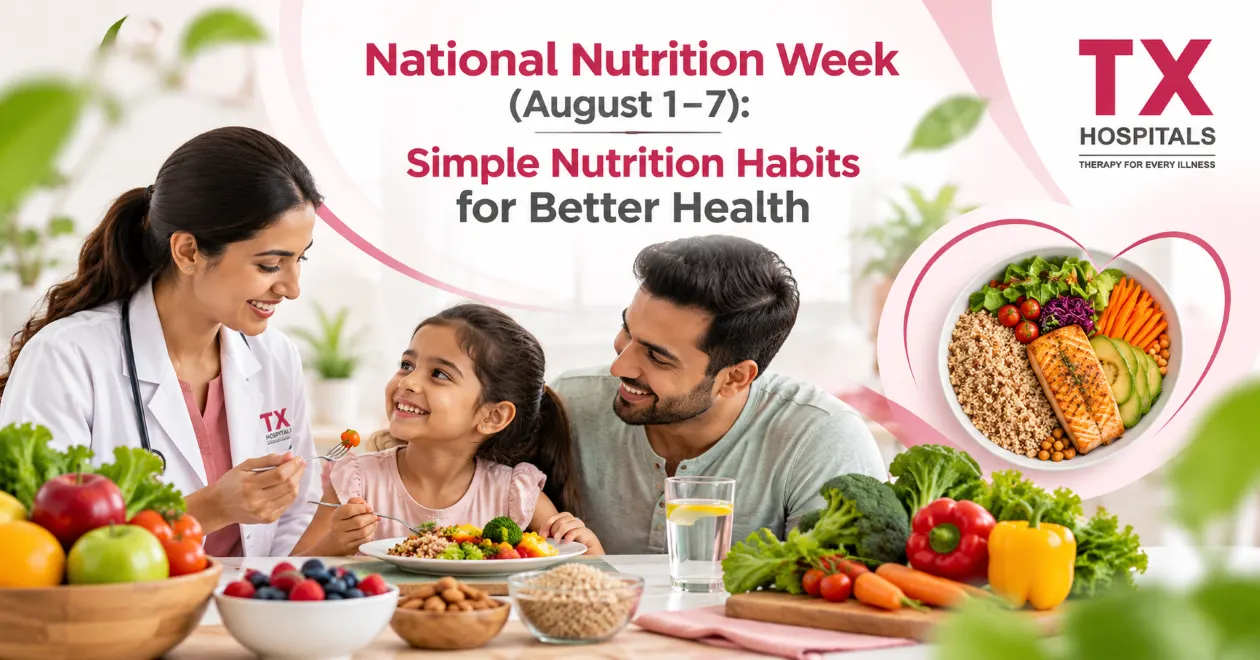
National Nutrition Week (August 1–7): Simple Nutrition Habits for Better Health
Introduction
Good health does not come from one food, one diet or one healthy meal. It comes from what we eat regularly and how we take care of our body every day.
National Nutrition Week, observed from August 1 to 7, is a good reminder to pay attention to our everyday food choices. With busy schedules, eating outside, skipping meals and relying on packaged foods becoming common, it can be easy to overlook basic nutrition.
This week is about understanding what your body needs and making small, practical changes that can support better health.
What Is National Nutrition Week?
National Nutrition Week is observed every year to create awareness about the importance of healthy eating and good nutrition. It encourages people to understand the role food plays in growth, energy, immunity, and overall well-being.
Nutrition is not only about losing weight or following a strict diet. It is about giving your body the nutrients it needs to function properly.
Why Does Good Nutrition Matter?
The food we eat gives our body energy and important nutrients. A balanced diet helps us stay active, support growth and maintain good health.
Poor eating habits can make you feel tired and may affect your health over time. TX Hospitals, one of the top multispecialty hospitals in Hyderabad, also highlights the importance of healthy eating for overall well-being.
Good nutrition is especially important for:
- Growing children
- Teenagers
- Pregnant and breastfeeding women
- Older adults
- People recovering from illness
- Anyone looking to stay healthy
What Does a Balanced Diet Look Like?
A balanced diet does not have to be complicated. Instead of completely cutting out certain foods, focus on including a variety of foods in your regular meals.
Try to include:
Fruits and vegetables: Add different seasonal fruits and vegetables to your meals. They provide vitamins, minerals and fibre.
Protein-rich foods: Include eggs, pulses, beans, lentils, fish, chicken, dairy products, nuts or other protein sources based on your dietary preferences.
Whole grains: Foods such as whole wheat, oats, brown rice and millets can be part of a balanced diet.
Healthy fats: Nuts, seeds and healthy cooking oils can provide fats that the body needs.
Enough water: Staying hydrated is just as important as eating well. Make water your regular drink and limit sugary beverages.
Small Food Habits Can Make a Difference
You do not need to completely change your diet overnight. Start with small changes that you can actually maintain.
For example:
- Do not regularly skip breakfast or other meals.
- Add at least one fruit or vegetable to your meals.
- Choose home-cooked food more often.
- Cut down on sugary drinks and highly processed snacks.
- Watch your portion sizes.
- Drink enough water throughout the day.
- Read food labels when buying packaged foods.
- Try to include different food groups instead of eating the same foods every day.
These simple habits can make healthy eating feel much easier and more realistic.
Nutrition Needs Can Differ From Person to Person
There is no single diet that works for everyone. Age, activity, lifestyle and health needs can all affect what your body needs.
For example, children and older adults may need different nutrients and portions. People who exercise regularly may also need more energy and protein.
If you are unsure about your nutrition needs, TX Hospitals, with some of the best doctors in Hyderabad, can help you understand what may work better for you.
Do Not Forget About Children’s Nutrition
Good nutrition during childhood supports normal growth and development. Children need a variety of nutrients as their bodies and brains develop.
Parents can encourage healthy eating by offering different foods and making meals enjoyable rather than turning food into a constant struggle.
Simple steps such as including fruits, vegetables, protein-rich foods, whole grains and dairy or suitable alternatives can help children get a wider range of nutrients.
Make Nutrition a Daily Habit
National Nutrition Week is only one week, but healthy eating is something we can work on throughout the year.
You do not need a perfect diet. You need habits that fit into your everyday life. Choosing a balanced meal, drinking enough water, adding more vegetables, or replacing a packaged snack with a healthier option may seem small, but these choices can add up over time.
Start With Your Next Meal
This National Nutrition Week, instead of worrying about strict diets or quick fixes, take a closer look at your everyday eating habits.
A healthy plate, enough water, regular meals and a little more attention to what you eat can be a simple starting point for better nutrition.
Small changes today can become healthier habits for the future.
Frequently Asked Questions
Disclaimer
The information provided in this blog is for general health awareness and educational purposes only. It should not be considered a substitute for professional medical advice, diagnosis or treatment. The content may not apply to every individual's health condition. Always consult a qualified healthcare professional for any medical concerns or treatment decisions. Do not ignore or delay medical advice based on the information shared in this blog.
Share this






Book Appointment
Categories
- Health Care
- Mother & Child
- Pediatric
- Health Days
- Urology
- Dental
- Gastroenterology
- Neurology
- Gynecology
- Orthopedics
- Cardiology
- Oncology
- Robotic Sciences
- Nephrology
- Rheumatology
- Orthopaedics
- Pulmonology
- Internal Medicine
- General Medicine
- Gastroeneterology
- Endocrinology
- Dermatology
- Pediatric Urologist
- Ophthalmology
- Gynecologist
- Ophthalmologist
- Ent
- Psychiatry
- Pediatrician
- Health Day
- General Physician
- Awarness Day
- Liver Transplantation Surgery
- internal medicine
- General Surgeries
- Health care
- ENT
- cardiothoracic & vascular surgery
- Pediatric Neurologist
- Gastroenterologist
- Gynecology Hospitals
- oncology
- Trauma Surgeons
- Neuro Sciences
- Internal Madicine
- cardiac sciences
- Genecology
- Dietician
- Diabetology