Severe Knee Arthritis: Is Robotic Knee Replacement the Right Option?

Introduction
Knee pain can make even simple activities like walking, climbing stairs or getting out of a chair difficult. For some people, the pain becomes so severe that medicines, exercises and other treatments no longer provide enough relief.
This often happens when knee arthritis reaches an advanced stage and the joint becomes badly damaged.
In such cases, doctors may recommend knee replacement surgery. Today, robotic-assisted technology is also being used to help surgeons plan and perform knee replacement procedures with greater accuracy.
But does everyone with severe knee arthritis need robotic knee replacement? How is it different from traditional surgery and who can benefit from it?
Let's understand when robotic knee replacement may be considered and what patients should know before deciding on surgery.
What Is Severe Knee Arthritis?
Knee arthritis develops when the cartilage that cushions the bones inside the knee joint gradually wears down.
Cartilage helps the bones move smoothly without rubbing against each other. When it becomes damaged, the joint may become painful, stiff and swollen.
As arthritis progresses, the space between the bones can become narrower. In advanced cases, the bones may rub against each other, causing significant pain and difficulty moving the knee.
Osteoarthritis is the most common type of knee arthritis, especially among older adults. However, inflammatory conditions such as rheumatoid arthritis can also damage the knee joint.
What Are the Signs of Severe Knee Arthritis?
Knee arthritis usually develops gradually. At first, the pain may occur only after walking or standing for a long time.
As the condition worsens, symptoms may become more frequent and start affecting everyday activities.
Common signs include:
- Knee pain when walking or using stairs
- Stiff knees after sitting for a while
- Swelling in or around the knee
- Trouble bending or straightening your knee
- Clicking or grinding sounds when moving
- Knee pain that keeps you awake at night
- Legs starting to look bowed or uneven
- Finding it hard to stand or walk for long
Some people may also experience knee pain even while resting.
If these symptoms continue despite treatment, it's important to get your knee checked. Patients searching for the best robotic knee specialists in Banjara Hills can consult the orthopaedic team at TX Hospitals to understand their knee condition and available treatment options.
When Does Knee Arthritis Require Replacement Surgery?
Not everyone with knee arthritis needs surgery.
In the early stages, doctors usually recommend non-surgical treatments to manage pain and improve movement.
These may include:
- Simple exercises to make the knee stronger
- Losing weight if needed
- Medicines to reduce pain
- Using knee supports or walking sticks
- Avoiding activities that make knee pain worse
- Knee injections if needed
However, these treatments may become less effective as arthritis progresses.
Knee replacement surgery may be considered when:
- Knee pain continues despite medicines and physiotherapy.
- Walking, climbing stairs or standing becomes difficult.
- Joint stiffness limits everyday movement.
- X-rays show advanced joint damage.
- Knee deformity affects walking or balance.
- Pain significantly affects sleep and quality of life.
The decision to undergo surgery is based on symptoms, examination findings, imaging results and how much the condition affects daily life.
What Is Robotic Knee Replacement Surgery?
Robotic knee replacement is a surgical procedure in which the surgeon uses robotic-assisted technology to help replace damaged parts of the knee joint with artificial implants.
The robot does not perform the surgery on its own. The orthopaedic surgeon controls the procedure, while the robotic system provides guidance during surgical planning and implant placement.
Depending on the system being used, robotic technology may help the surgeon:
- Check the shape and condition of the knee
- Choose the right implant size and position
- Make sure the knee is properly aligned
- Guide the surgeon while preparing the bone
- Check how well the knee moves during surgery
The goal is to place the new knee joint correctly so it can move smoothly and work better.
Patients considering robotic knee replacement surgery in Hyderabad should discuss whether this approach is suitable for their condition, as not every patient requires robotic assistance.
How Is Robotic Knee Replacement Surgery Performed?
The exact steps may vary depending on the robotic system and the patient's condition.
1. Checking the Knee Joint
Before surgery, the doctor examines the knee and reviews X-rays. Some robotic systems also require a CT scan to create a detailed model of the joint.
This helps the surgeon understand the extent of damage and plan the operation.
2. Planning the Implant Position
The surgeon uses the robotic system to plan how the artificial knee joint should be positioned.
The plan may be adjusted during surgery based on the patient's anatomy and joint movement.
3. Removing the Damaged Joint Surfaces
During surgery, the robotic system helps guide the surgeon while removing damaged bone and cartilage.
The surgeon remains in control of the instruments throughout the procedure.
4. Placing the Artificial Knee Joint
The surgeon places the artificial implant and checks its position, alignment and stability.
The goal is to help the knee move and bend easily.
5. Recovery After Surgery
After surgery, doctors check the patient's condition. Most patients start walking with support and doing simple exercises soon after surgery.
The recovery plan depends on the patient's health, the type of replacement and the surgeon's instructions.
What Are the Benefits of Robotic Knee Replacement?
Robotic-assisted knee replacement offers certain technical advantages, particularly in surgical planning and implant positioning.
Possible benefits include:
1. Better Implant Placement
Robotic technology helps the surgeon place the new knee joint in the right position.
2. Better Knee Alignment
The system helps the surgeon check and adjust the knee's alignment during surgery.
3. Better Surgical Planning
Detailed information about the knee helps the surgeon plan the procedure before and during surgery.
4. Controlled Bone Preparation
Some robotic systems provide guidance that helps the surgeon prepare the bone within planned boundaries.
5. May Help with Early Recovery
Some patients may have less pain and recover sooner after robotic knee surgery, but results can vary.
Robotic surgery does not guarantee less pain, faster recovery or a longer-lasting knee implant.
Long-term results also depend on the surgeon's experience, implant quality, rehabilitation and the patient's overall health.
Robotic vs Traditional Knee Replacement: What's the Difference?
Both robotic and traditional knee replacement surgeries aim to remove damaged joint surfaces and replace them with artificial components.
The main difference is how the surgeon plans and guides the procedure.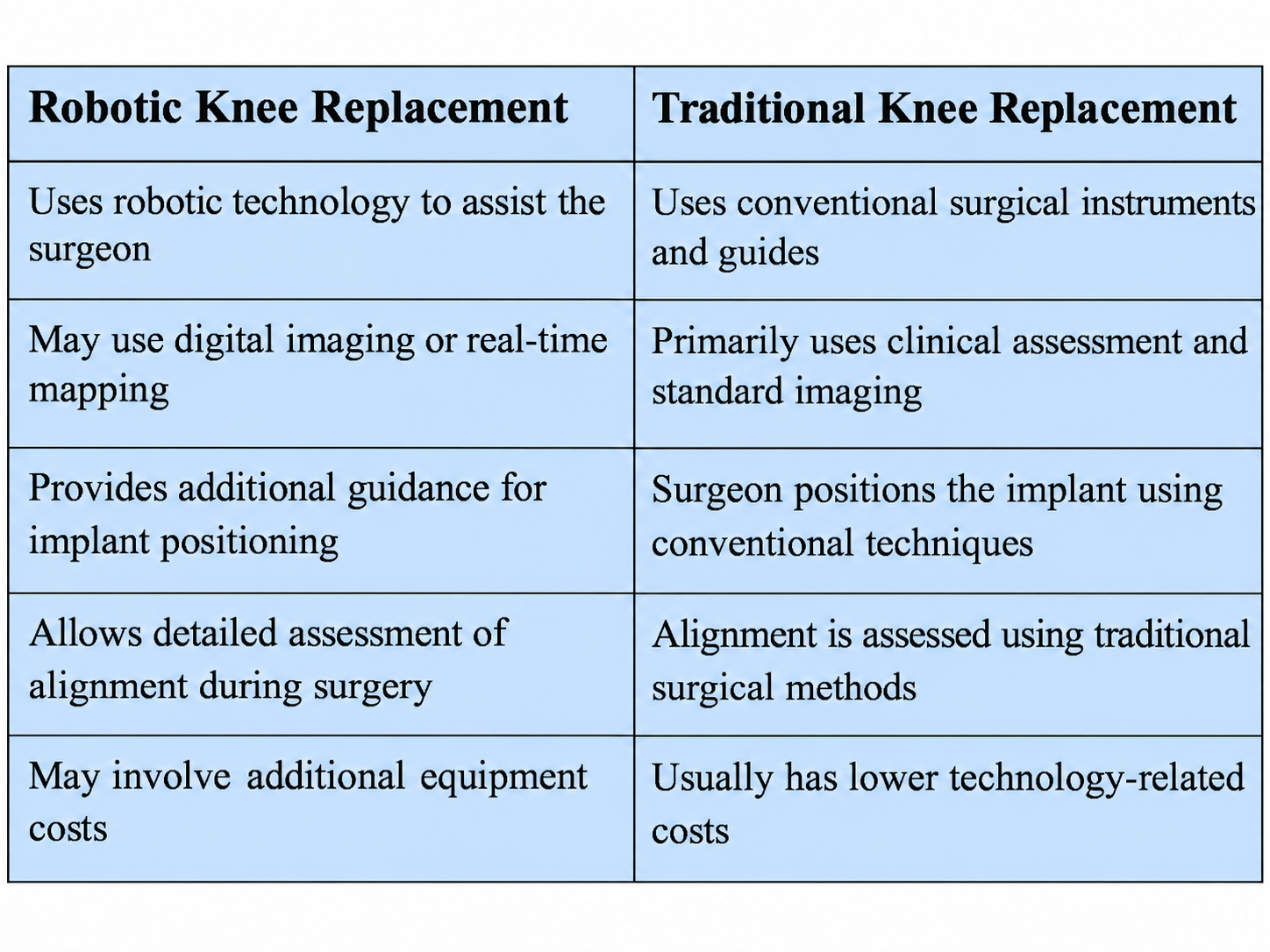
Both approaches can provide significant pain relief and improved mobility.
Current evidence shows that robotic systems can improve certain measures of implant positioning, but their long-term superiority in patient outcomes has not been firmly established.
Who Is the Right Candidate for Robotic Knee Replacement?
Robotic knee replacement may be an option for people with advanced knee arthritis who have not experienced enough relief from non-surgical treatments.
Doctors may consider it for patients who have:
- Severe osteoarthritis affecting the knee joint
- Knee pain that makes daily activities difficult
- Worn-out knee cartilage or bones rubbing together
- Changes in knee shape due to joint damage
- Trouble walking even after treatment
- Severe knee damage seen on X-rays or scans
However, the presence of severe arthritis alone does not automatically mean robotic surgery is necessary.
Patients with certain medical conditions, active infections or other surgical risks may need further assessment before knee replacement.
An experienced top robotic knee replacement surgeon in Banjara Hills at TX Hospitals can evaluate the joint and explain whether robotic-assisted or conventional knee replacement is more appropriate.
How Long Does Recovery Take After Robotic Knee Replacement?
Recovery time differs for each person. Most patients can start walking with support within a day or two after surgery.
Here's a general recovery timeline:
- First few days: Start walking with support and begin physiotherapy.
- 2–6 weeks: Walking becomes easier, and daily activities gradually improve.
- 6–12 weeks: Knee strength and movement improve.
- 3–6 months: Most routine activities become more comfortable.
- Up to 1 year: The knee continues to heal and regain strength.
Regular physiotherapy, proper rest and following your doctor's advice can help with recovery.
When Should You Consult an Orthopaedic Specialist?
If knee pain is making it difficult to walk, climb stairs or manage everyday activities, it may be time to consult an orthopaedic specialist.
Severe arthritis does not always require immediate surgery. However, delaying medical evaluation can allow pain and movement difficulties to continue affecting daily life.
Patients exploring best robotic knee replacement hospitals in Banjara Hills can consult orthopaedic specialists at TX Hospitals to understand the extent of their knee damage and discuss suitable treatment options.
The decision to undergo knee replacement should be based on the patient's symptoms, joint condition and overall health rather than the technology alone.
Take the Next Step Towards Better Movement
Severe knee arthritis can affect mobility, independence and quality of life. When medicines, physiotherapy and other treatments no longer provide enough relief, knee replacement surgery may be an option.
Robotic-assisted knee replacement helps surgeons plan the procedure and position implants with greater precision. However, it is not necessarily the best choice for every patient.
A proper orthopaedic evaluation can help determine whether robotic or traditional knee replacement is more suitable.
Frequently Asked Questions
Disclaimer
The information provided in this blog is for general health awareness and educational purposes only. It should not be considered a substitute for professional medical advice, diagnosis or treatment. The content may not apply to every individual's health condition. Always consult a qualified healthcare professional for any medical concerns or treatment decisions. Do not ignore or delay medical advice based on the information shared in this blog.
Share this






Book Appointment
Categories
- Health Care
- Mother & Child
- Pediatric
- Health Days
- Urology
- Dental
- Gastroenterology
- Neurology
- Gynecology
- Orthopedics
- Cardiology
- Oncology
- Robotic Sciences
- Nephrology
- Rheumatology
- Pulmonology
- Cardiothoracic & Vascular Surgery
- Internal Medicine
- General Medicine
- Gastroeneterology
- Endocrinology
- Dermatology
- Pediatric Urologist
- Ophthalmology
- Gynecologist
- Ophthalmologist
- Ent
- Psychiatry
- Pediatrician
- Health Day
- Orthopaedics
- Spine Surgery
- General Physician
- Awarness Day
- Liver Transplantation Surgery
- Robotic Gastrointestinal (GI) Surgery
- Cardiac Sciences
- internal medicine
- General Surgeries
- Health care
- ENT
- cardiothoracic & vascular surgery
- Pediatric Neurologist
- Gastroenterologist
- Gynecology Hospitals
- oncology
- Trauma Surgeons
- Neuro Sciences
- Internal Madicine
- cardiac sciences
- Genecology
- Dietician
- Diabetology