Sinus Headache or Migraine: How to Tell the Difference
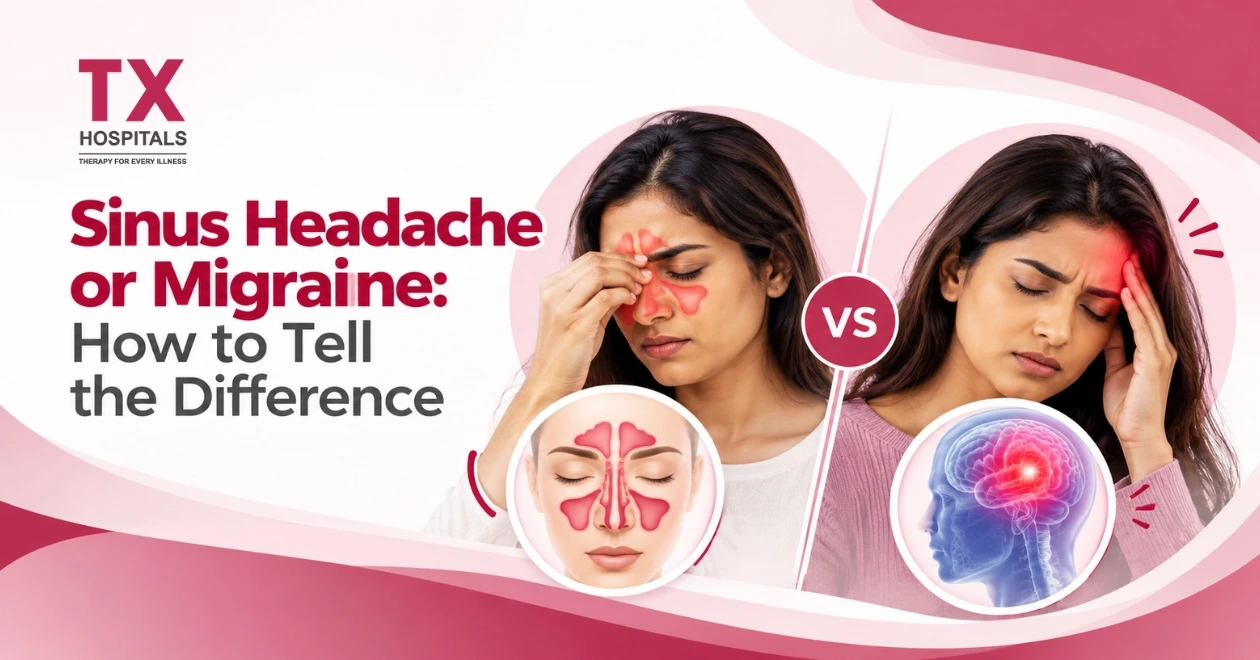
A headache around your forehead, cheeks, eyes, or nose can make you wonder if you have a sinus problem. But not every headache with facial pressure is caused by sinusitis. In fact, migraine can sometimes feel very similar to a sinus headache, making it difficult to know what is really causing the pain.
Knowing the difference between a sinus headache and migraine can help you understand your symptoms and get the right treatment.
What Is a sinus Headache?
A sinus headache is usually linked to inflammation or infection in the sinuses. When the sinuses become blocked or swollen, pressure can build up around the forehead, cheeks, nose and eyes.
Sinus-related headaches are more likely to occur along with other symptoms of sinus problems, such as a blocked or runny nose, thick nasal mucus, reduced sense of smell, facial tenderness or fever.
What is a Migraine?
A migraine is more than just a normal headache. It is a neurological condition that can cause moderate to severe pain, often on one side of the head.
Migraine attacks may also cause nausea, vomiting and increased sensitivity to light or sound. Some people may notice warning signs called an aura before the headache starts, such as flashing lights, blind spots, or tingling sensations. For recurring or severe migraines, TX Hospitals, one of the top neurology hospitals in Hyderabad, provides evaluation and treatment based on the symptoms.
Sinus Headache vs Migraine: what’s the difference?
Although the symptoms can overlap, there are some useful differences to look for.
1. Type of Pain
Sinus-related pain usually feels like pressure or fullness around the forehead, cheeks, nose or eyes.
Migraine pain is more commonly throbbing or pulsating and can be severe enough to interfere with normal activities.
2. Nasal Symptoms
A blocked nose and thick nasal discharge are more suggestive of a sinus problem, particularly when they occur with facial pain and other infection symptoms.
However, migraine can also cause nasal congestion or a runny nose. So, having nasal symptoms alone does not necessarily mean you have sinusitis.
3. Nausea and Vomiting
Nausea and vomiting are much more commonly associated with migraine. If your headache regularly comes with nausea or vomiting, migraine may be more likely.
4. Light and Sound Sensitivity
Bright lights and loud sounds can make a migraine worse. Many people with migraine prefer to rest in a quiet, dark room during an attack.
These symptoms are less typical of a sinus-related headache.
5. Fever and Infection Symptoms
A fever, thick or discoloured nasal mucus, facial tenderness, and symptoms of a cold or sinus infection may point towards a sinus problem.
Migraine itself does not usually cause a fever.
Why are sinus Headaches and Migraines often confused?
The two conditions can share several symptoms. Both may cause pain around the eyes, forehead and face. Migraine can also cause nasal congestion, watery eyes and facial pressure.
Because of this overlap, people sometimes assume they have a sinus headache when the actual problem is migraine. If the symptoms keep coming back, consulting TX Hospitals, with some of the best neurologists in Hyderabad, can help identify the actual cause.
Taking antibiotics or sinus medicines when the headache is actually a migraine may not provide much relief. This is why identifying the pattern of your symptoms is important.
Common Migraine triggers to watch for
If your headaches keep coming back, it may help to notice what happens before an attack. Common migraine triggers can include:
- Lack of sleep or changes in sleep routine
- Skipping meals
- Stress
- Bright lights
- Strong smells
- Certain foods
- Dehydration
- Hormonal changes
- Too much caffeine or suddenly stopping caffeine
Keeping a simple headache diary can help you identify patterns and possible triggers.
When should you see a Doctor?
Occasional headaches may improve with rest, hydration, and appropriate treatment. However, you should speak with a doctor if your headaches:
- Keep coming back frequently
- Are becoming more severe
- Interfere with work, sleep, or daily activities
- Are not improving with your usual treatment
- Occur with repeated vomiting or vision changes
- Come with persistent sinus symptoms or fever
Seek urgent medical attention if you experience a sudden, extremely severe headache, confusion, fainting, weakness, difficulty speaking or other unusual neurological symptoms.
Get the right Diagnosis for your Headache
Not every headache that causes facial pressure is a sinus headache. Migraines and sinus problems can feel very similar, but they have different causes and may need different treatments.
If you are unsure what is causing your recurring headaches, getting checked by a doctor can help identify the cause and guide you towards the right treatment. For persistent headaches or sinus-related symptoms, consulting the best ENT specialists in Hyderabad at TX Hospitals can help you understand the underlying cause and receive appropriate care.
Don’t keep treating every headache as a sinus problem without knowing what’s actually causing it. Getting the right diagnosis is the first step towards finding effective relief.
Call 9144514459
Frequently Asked Questions
Disclaimer
The information provided in this blog is for general health awareness and educational purposes only. It should not be considered a substitute for professional medical advice, diagnosis or treatment. The content may not apply to every individual's health condition. Always consult a qualified healthcare professional for any medical concerns or treatment decisions. Do not ignore or delay medical advice based on the information shared in this blog.
Share this


Book Appointment
Categories
- Health Care
- Mother & Child
- Pediatric
- Health Days
- Urology
- Dental
- Gastroenterology
- Neurology
- Gynecology
- Orthopedics
- Cardiology
- Oncology
- Robotic Sciences
- Nephrology
- Rheumatology
- Orthopaedics
- Pulmonology
- Internal Medicine
- General Medicine
- Gastroeneterology
- Endocrinology
- Dermatology
- Pediatric Urologist
- Ophthalmology
- Gynecologist
- Ophthalmologist
- Ent
- Psychiatry
- Pediatrician
- Health Day
- Spine Surgery
- General Physician
- Awarness Day
- Liver Transplantation Surgery
- internal medicine
- General Surgeries
- Health care
- ENT
- cardiothoracic & vascular surgery
- Pediatric Neurologist
- Gastroenterologist
- Gynecology Hospitals
- oncology
- Trauma Surgeons
- Neuro Sciences
- Internal Madicine
- cardiac sciences
- Genecology
- Dietician
- Diabetology