The Silent Symptoms of Anemia: Don’t Ignore the Hidden Signs
The Silent Symptoms of Anemia: Don’t Ignore the Hidden Signs
Do you often feel tired, lightheaded, or unusually cold? You might be overlooking the silent signs of anemia.
Anemia is one of the most common yet underdiagnosed blood disorders affecting millions of people—especially women, children, and the elderly. At TX Hospitals, Hyderabad, we emphasize early recognition and diagnosis to prevent long-term complications and restore your energy and health. Let’s explore what anemia is, why it often goes undiagnosed and the subtle symptoms you should never ignore.
What is Anemia?
Anemia is a condition in which your body lacks enough healthy red blood cells or hemoglobin to carry adequate oxygen to your tissues. Hemoglobin is a protein in red blood cells that binds oxygen and delivers it throughout the body. When these levels are too low, your body struggles to get the oxygen it needs—leading to fatigue and other symptoms.
There are several types of anemia, but the most common is iron-deficiency anemia. Other forms include vitamin B12 deficiency anemia, folic acid deficiency, anemia of chronic disease, Hemolytic anemia and Aplastic anemia.
Why Anemia Often Goes Undetected
Many people live with anemia without knowing it. The symptoms tend to develop slowly and are often mistaken for general tiredness, stress, or aging. Since the body tries to adapt to lower oxygen levels over time, you may not notice any red flags until the anemia becomes moderate or severe.
That’s why it’s important to stay alert to subtle changes in your body.
Silent Symptoms of Anemia You Shouldn’t Ignore
Here are some of the most common yet quiet indicators of anemia:
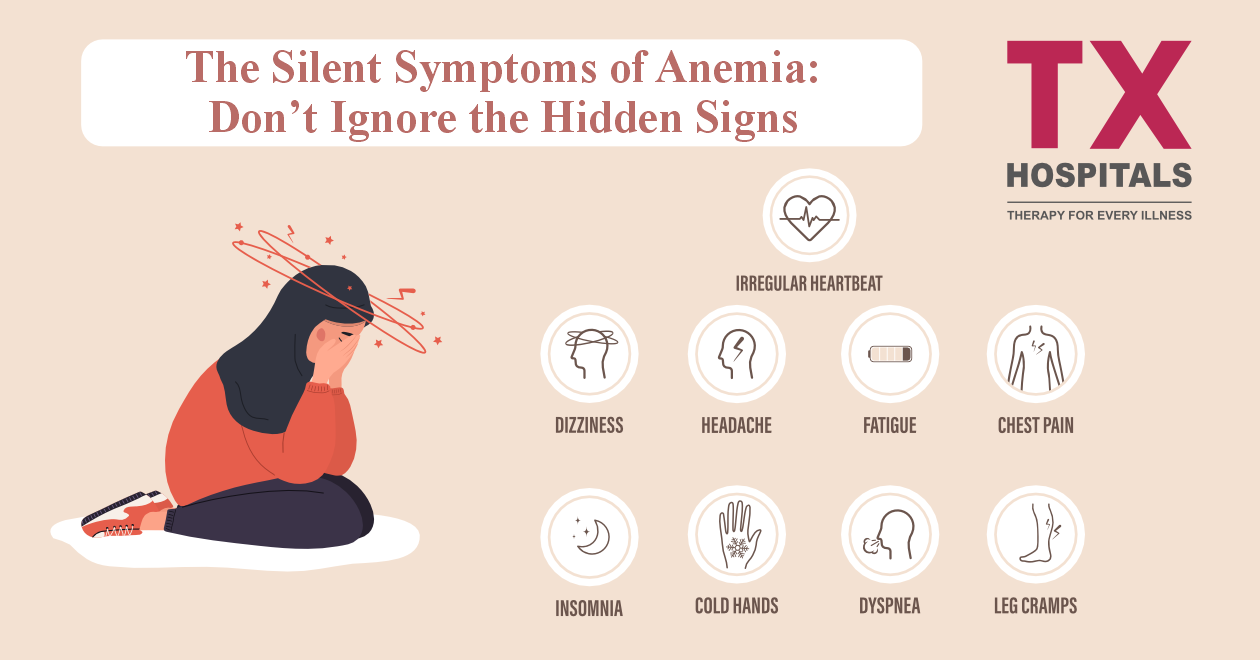
- Persistent Fatigue: Feeling exhausted despite adequate rest is one of the first signs of anemia. Your muscles and organs aren’t receiving enough oxygen to function efficiently.
- Pale or Yellowish Skin: A noticeable paleness in your face, inner eyelids, or nails could signal low red blood cell count. In some cases, the skin may also appear slightly yellowish, especially in vitamin B12 deficiency anemia.
- Shortness of Breath: If climbing stairs or walking short distances leaves you winded, it may be due to insufficient oxygen being delivered to your lungs and muscles.
- Headaches and Dizziness: Frequent headaches, lightheadedness, or feeling faint can result from reduced oxygen supply to the brain. These symptoms are especially common when anemia worsens.
- Cold Hands and Feet: When oxygen delivery is limited, your extremities—like fingers and toes—might feel unusually cold. Poor circulation due to anemia may also make your hands and feet feel numb or tingly.
- Brittle Nails and Hair Loss: If your nails break easily or your hair is thinning or falling out more than usual, it might be a sign that your body is lacking essential nutrients like iron or folate—both crucial for healthy blood and hair.
- Chest Pain or Irregular Heartbeats: In moderate to severe cases, anemia forces your heart to pump harder to compensate for the low oxygen levels. This can lead to symptoms like chest pain, rapid heartbeat, or even palpitations.
- Note: These symptoms can be dangerous, especially if you have existing heart conditions. Seek immediate medical attention.
- Craving Non-Food Substances (Pica): Craving non-food substances like ice, chalk, or clay? This may be a sign of iron-deficiency anemia.
- Cognitive Difficulties: Brain fog, poor concentration and memory issues can be signs your brain isn’t receiving enough oxygen due to low hemoglobin levels.
- Restless Legs Syndrome: An uncontrollable urge to move your legs, especially at night, is common in people with iron-deficiency anemia.
Who is at Risk of Anemia?
Certain groups are more prone to anemia due to lifestyle or medical factors:
- Women (especially during menstruation or pregnancy)
- Children and teens (due to growth spurts and poor nutrition)
- Vegetarians or vegans (low iron intake from non-meat sources)
- Elderly individuals
- People with chronic illnesses (e.g., kidney disease, cancer, thyroid problems)
- Frequent blood donors
Diagnosis: How Anemia is Detected
If you suspect anemia, a simple blood test called a Complete Blood Count (CBC) can evaluate your hemoglobin levels and red blood cell count.
Depending on the cause, further tests may include:
- Iron studies
- Vitamin B12 and folate levels
- hyroid function tests
- Stool tests for internal bleeding
At TX Hospitals, Hyderabad, we offer comprehensive blood testing and expert consultations to uncover the root cause of your symptoms.
How to Prevent or Manage Anemia
Adopting these lifestyle changes can help you prevent or manage anemia:
- Eat iron-rich foods (e.g., spinach, red meat, legumes)
- Include vitamin C with meals to boost iron absorption
- Take iron, B12, or folic acid supplements if prescribed
- Avoid tea/coffee near meals—they reduce iron absorption
- Stay hydrated
- Get regular blood tests if you’re in a high-risk group
- Don’t ignore persistent fatigue or unusual symptoms
When to See a Doctor
If you’ve experienced persistent tiredness, pale skin, dizziness, or any of the symptoms above for more than a few days—it’s time to see a doctor. Anemia is treatable, and early intervention can prevent long-term health risks.
At TX Hospitals, Hyderabad, our experienced team of internal medicine specialists, hematologists, and endocrinologists offer personalized treatment plans tailored to your specific health needs.
Recognized as the Best Hospital for Health Checkup in Hyderabad, TX Hospitals ensures comprehensive evaluations using advanced diagnostics and expert care.
Book Your Anemia Screening Today
Don’t let silent symptoms take a toll on your health. Visit your nearest TX Hospitals branch in Hyderabad.
Call: 9144514459 to schedule your blood test or consultation.
Learn more: www.txhospitals.in
Your wellness starts with awareness. Let TX Hospitals guide you back to full vitality.
Disclaimer
The information provided in this blog is for general health awareness and educational purposes only. It should not be considered a substitute for professional medical advice, diagnosis or treatment. The content may not apply to every individual's health condition. Always consult a qualified healthcare professional for any medical concerns or treatment decisions. Do not ignore or delay medical advice based on the information shared in this blog.
Share this






Book Appointment
Categories
- Health Care
- Mother & Child
- Pediatric
- Health Days
- Urology
- Dental
- Gastroenterology
- Neurology
- Gynecology
- Orthopedics
- Cardiology
- Oncology
- Robotic Sciences
- Nephrology
- Rheumatology
- Orthopaedics
- Pulmonology
- Internal Medicine
- General Medicine
- Gastroeneterology
- Endocrinology
- Dermatology
- Pediatric Urologist
- Ophthalmology
- Gynecologist
- Ophthalmologist
- Ent
- Psychiatry
- Pediatrician
- Health Day
- General Physician
- Awarness Day
- Liver Transplantation Surgery
- internal medicine
- General Surgeries
- Health care
- ENT
- cardiothoracic & vascular surgery
- Pediatric Neurologist
- Gastroenterologist
- Gynecology Hospitals
- oncology
- Trauma Surgeons
- Neuro Sciences
- Internal Madicine
- cardiac sciences
- Genecology
- Dietician
- Diabetology
, ,