Tympanoplasty Surgery: How a Damaged Eardrum Is Repaired
Introduction
Have you ever experienced repeated ear infections, ear discharge or difficulty hearing? Sometimes, these problems may be caused by a small hole or tear in the eardrum.
The eardrum is a thin layer of tissue inside the ear that helps us hear sounds and protects the middle ear. When it gets damaged, it may affect hearing and make the ear more prone to infections.
While some eardrum holes heal naturally, others may remain open and need surgery.
Tympanoplasty surgery is a procedure used to repair a damaged eardrum and help restore its normal function.
Let's understand why the eardrum gets damaged, how tympanoplasty is performed and what to expect during recovery.
What Is Tympanoplasty Surgery?
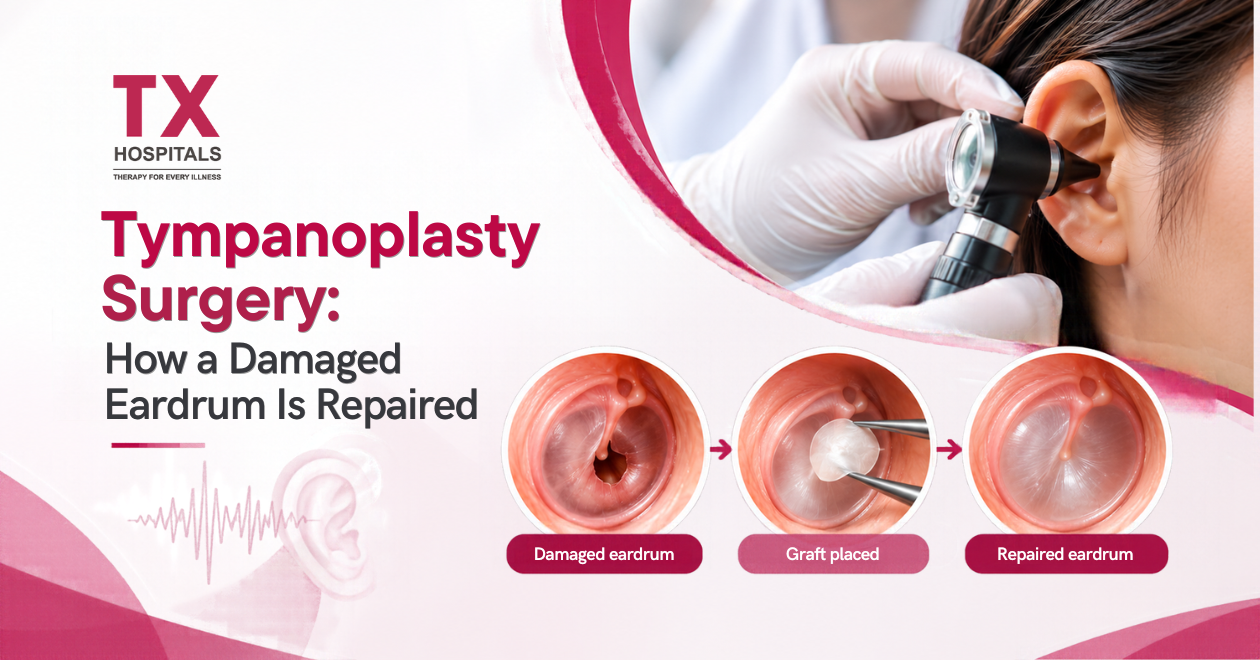
Tympanoplasty is a surgical procedure performed to repair a hole or tear in the eardrum, also called a perforated eardrum.
The eardrum separates the outer ear from the middle ear. When sound enters the ear, the eardrum vibrates and helps transmit sound to the small bones inside the middle ear.
If there is a hole in the eardrum, these vibrations may not work properly, leading to hearing difficulties.
During tympanoplasty, the surgeon uses a small piece of tissue, called a graft, to close the hole and help the eardrum heal.
The main goals of tympanoplasty surgery are to:
- Close the hole in the eardrum
- Reduce repeated ear infections
- Prevent water from entering the middle ear through the perforation
- Improve hearing when possible
- Protect the middle ear from further problems
Hearing improvement depends on the condition of the middle ear and other factors.
What Causes a Damaged or Perforated Eardrum?
An eardrum can become damaged for several reasons. Sometimes, the damage happens suddenly, while in other cases, it develops after repeated ear problems.
Common causes include:
1. Repeated Ear Infections
Frequent middle ear infections can cause fluid or pus to build up behind the eardrum. This pressure may eventually cause a hole.
2. Injury to the Ear
Using cotton buds, hairpins or other objects inside the ear can accidentally damage the eardrum.
3. Sudden Changes in Pressure
Rapid pressure changes during flying, diving or other activities can sometimes cause an eardrum to rupture.
4. Loud Sounds or Explosions
A very loud blast close to the ear may damage the eardrum.
5. Long-Standing Ear Problems
Chronic middle ear infections can prevent an eardrum perforation from healing naturally.
Not every damaged eardrum requires surgery. Some small perforations heal on their own within a few weeks.
What Are the Symptoms of a Damaged Eardrum?
A damaged eardrum may cause noticeable symptoms, although some people experience only mild hearing problems.
Common symptoms include:
- Reduced hearing in the affected ear
- Repeated ear infections
- Fluid or pus coming from the ear
- Ringing or buzzing sounds in the ear
- Ear pain or discomfort
- A feeling of fullness in the ear
- Occasional dizziness
Some people may have a hole in the eardrum without experiencing pain.
If ear discharge continues or hearing becomes difficult, it is important to get the ear checked. At TX Hospitals, patients searching for the best ENT specialists in Banjara Hills can seek an ear examination to understand the cause of their symptoms and discuss suitable treatment options.
When Is Tympanoplasty Surgery Needed?
Not everyone with a perforated eardrum needs tympanoplasty.
Small holes may close naturally, especially when the ear is kept dry and infections are treated properly.
However, surgery may be recommended when:
- The eardrum hole does not heal on its own
- Ear infections keep coming back
- There is repeated or persistent ear discharge
- Hearing is affected by the perforation
- Water entering the ear frequently causes infections
- The perforation is large or unlikely to heal naturally
An ENT specialist will examine the eardrum, assess hearing and check for infection before recommending surgery.
How Is Tympanoplasty Surgery Performed?
Tympanoplasty is usually performed under general anaesthesia, although local anaesthesia may be used in selected cases.
The exact technique depends on the size and location of the hole and the condition of the middle ear.
Here's how the procedure generally works.
1. Ear Examination
Before surgery, the ENT specialist examines the ear and may recommend hearing tests to understand how much hearing has been affected.
2. Preparing the Graft
The surgeon takes a small piece of tissue, often from near the ear, or uses another suitable graft material to repair the eardrum.
3. Reaching the Damaged Eardrum
The surgeon reaches the eardrum through the ear canal or through a small cut near or behind the ear, depending on the surgical technique.
4. Repairing the Eardrum
The graft is carefully positioned to cover the hole. It acts as support for the eardrum to heal.
5. Supporting the Repair
Soft packing material may be placed inside the ear to keep the graft in position while healing begins.
The procedure commonly takes around one to three hours, depending on the complexity of the repair and whether additional middle ear work is needed.
What Are the Benefits of Tympanoplasty Surgery?
Tympanoplasty can help people who have ongoing problems due to a damaged eardrum.
Possible benefits include:
- Closing a long-standing eardrum hole
- Reducing the frequency of ear infections
- Helping keep the middle ear protected
- Improving hearing in some patients
- Reducing repeated ear discharge
- Making everyday activities more comfortable after healing
However, the results can vary. Some people notice better hearing, while others may have little change, particularly if there are other problems affecting the middle ear.
Precautions to Follow After Tympanoplasty Surgery
Taking care of the ear after surgery helps protect the repair.
Doctors generally recommend the following precautions:
- Keep the operated ear dry until your doctor says it is safe to get it wet.
- Avoid swimming until the ear has healed.
- Do not insert cotton buds or other objects into the ear.
- Avoid blowing your nose forcefully.
- Sneeze with your mouth open to reduce pressure in the ear.
- Avoid heavy lifting and strenuous exercise until cleared by your doctor.
- Use prescribed medicines and ear drops as directed.
- Attend scheduled follow-up appointments.
Flying and diving should also be discussed with the surgeon before resuming these activities.
If you develop severe pain, fever, worsening dizziness, heavy bleeding or unusual discharge, contact an ENT doctor promptly.
When Should You Consult an ENT Specialist?
A damaged eardrum should not be ignored, especially if ear infections keep coming back or hearing becomes difficult.
An ENT consultation may be needed if there is continuous ear discharge, reduced hearing, repeated ear infections or a hole in the eardrum that has not healed.
A simple ear examination and hearing test can help identify the problem and determine whether the eardrum can heal on its own or needs surgery.
For those searching for top ENT hospitals in Banjara Hills, TX Hospitals offers ENT consultations to assess eardrum damage and help determine whether tympanoplasty surgery is needed.
A Damaged Eardrum Can Often Be Repaired
Living with repeated ear infections or reduced hearing can affect everyday comfort and communication.
Tympanoplasty surgery can help close a damaged eardrum, reduce infections and improve hearing in selected patients.
The important thing is to identify the problem early and understand whether the eardrum can heal on its own or needs repair.
Getting the right ENT evaluation can help protect ear health and prevent ongoing problems.
Frequently Asked Questions
Disclaimer
The information provided in this blog is for general health awareness and educational purposes only. It should not be considered a substitute for professional medical advice, diagnosis or treatment. The content may not apply to every individual's health condition. Always consult a qualified healthcare professional for any medical concerns or treatment decisions. Do not ignore or delay medical advice based on the information shared in this blog.
Share this






Book Appointment
Categories
- Health Care
- Mother & Child
- Pediatric
- Health Days
- Urology
- Dental
- Gastroenterology
- Neurology
- Gynecology
- Orthopedics
- Cardiology
- Oncology
- Robotic Sciences
- Nephrology
- Rheumatology
- Pulmonology
- Cardiothoracic & Vascular Surgery
- Internal Medicine
- General Medicine
- Gastroeneterology
- Endocrinology
- Dermatology
- Pediatric Urologist
- Ophthalmology
- Gynecologist
- Ophthalmologist
- Ent
- Psychiatry
- Pediatrician
- Health Day
- Orthopaedics
- Spine Surgery
- General Physician
- Awarness Day
- Liver Transplantation Surgery
- Robotic Gastrointestinal (GI) Surgery
- Cardiac Sciences
- internal medicine
- General Surgeries
- Health care
- ENT
- cardiothoracic & vascular surgery
- Pediatric Neurologist
- Gastroenterologist
- Gynecology Hospitals
- oncology
- Trauma Surgeons
- Neuro Sciences
- Internal Madicine
- cardiac sciences
- Genecology
- Dietician
- Diabetology