Vitamins vs. Supplements: What You Really Need for Better Health
Vitamins vs. Supplements: What You Really Need for Better Health
In today’s fast-paced world, shelves lined with colorful bottles of pills and powders have become a common sight. But with so many options available, it’s easy to get confused about what your body actually needs. Are vitamins enough? Do you need extra supplements? What’s the difference between the two?
At TX Hospitals, Hyderabad, our expert nutritionists and internal medicine specialists often get these questions from patients. This blog will clear the air around vitamins and supplements and help you make informed decisions about your health.
Understanding Vitamins
Vitamins are essential organic compounds that your body needs in small amounts to function properly. They are naturally found in food and support critical bodily processes like immunity, energy production, and wound healing.
There are two main types:
- Water-soluble (e.g., Vitamin C, B-complex): These dissolve in water and need to be consumed regularly.
- Fat-soluble (e.g., Vitamins A, D, E, K): These are stored in fat tissues and liver for later use.
What Are Supplements?
Supplements are products that contain vitamins, minerals, herbs, amino acids, enzymes, or other substances intended to “supplement” your diet. They come in many forms — tablets, capsules, powders, or liquids.
Common supplements include:
- Multivitamin tablets
- Omega-3 capsules
- Iron and calcium pills
- Protein powders
- Herbal extracts (like turmeric, ginseng)
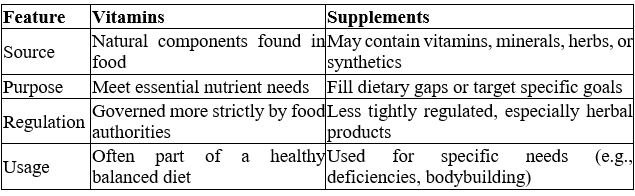
Vitamins vs. Supplements: Key Differences
Do You Really Need Supplements?
Not always. A healthy, balanced diet often provides all the essential nutrients your body needs.
However, you may need supplements if you:
- Have a diagnosed vitamin or mineral deficiency (e.g., Vitamin D or Iron)
- Follow a restricted diet (e.g., vegan, gluten-free)
- Are pregnant or planning to conceive
- Are over 50 (absorption of nutrients declines with age)
- Have chronic conditions (e.g., malabsorption, kidney disease)
- Take certain medications that affect nutrient absorption
Can You Take Too Many Vitamins or Supplements?
Yes. More is not always better. Taking high doses of certain vitamins (like A, D, or E) or minerals (like iron or calcium) without medical supervision can lead to toxicity or interfere with medication.
For example:
- Excessive Vitamin A may cause liver damage
- High iron can lead to stomach problems and organ overload
- Over-supplementation of calcium may raise the risk of kidney stones
Take the First Step Toward Smarter Health Choices
Supplements are meant to fill nutritional gaps — not replace real food. Whole foods like fruits, vegetables, grains, legumes, and lean proteins contain not only vitamins and minerals but also fiber, antioxidants, and other beneficial compounds that supplements alone cannot provide.
At TX Hospitals, our nutrition and internal medicine departments collaborate to create personalized supplement and dietary plans tailored to your health needs whether it's boosting immunity, enhancing energy levels, or managing chronic conditions.
As the Best Multi-specialty Hospital in Hyderabad, we take a holistic approach, combining expert nutrition guidance with comprehensive medical care to support your long-term wellness
Think you might be low on certain vitamins or overusing supplements? Don’t guess — get expert, medically-backed guidance.
Book a consultation with our nutrition and wellness team at TX Hospitals, Hyderabad.
Call: 9144514459, Website: txhospitals.in
Disclaimer
The information provided in this blog is for general health awareness and educational purposes only. It should not be considered a substitute for professional medical advice, diagnosis or treatment. The content may not apply to every individual's health condition. Always consult a qualified healthcare professional for any medical concerns or treatment decisions. Do not ignore or delay medical advice based on the information shared in this blog.
Share this






Book Appointment
Categories
- Health Care
- Mother & Child
- Pediatric
- Health Days
- Urology
- Dental
- Gastroenterology
- Neurology
- Gynecology
- Orthopedics
- Cardiology
- Oncology
- Robotic Sciences
- Nephrology
- Rheumatology
- Pulmonology
- Cardiothoracic & Vascular Surgery
- Internal Medicine
- General Medicine
- Gastroeneterology
- Endocrinology
- Dermatology
- Pediatric Urologist
- Ophthalmology
- Gynecologist
- Ophthalmologist
- Ent
- Psychiatry
- Pediatrician
- Health Day
- Orthopaedics
- Spine Surgery
- General Physician
- Awarness Day
- Liver Transplantation Surgery
- Robotic Gastrointestinal (GI) Surgery
- Cardiac Sciences
- internal medicine
- ENT
- General Surgeries
- Health care
- cardiothoracic & vascular surgery
- Pediatric Neurologist
- Gastroenterologist
- Gynecology Hospitals
- oncology
- Trauma Surgeons
- Neuro Sciences
- Internal Madicine
- cardiac sciences
- Genecology
- Dietician
- Diabetology
, , , ,