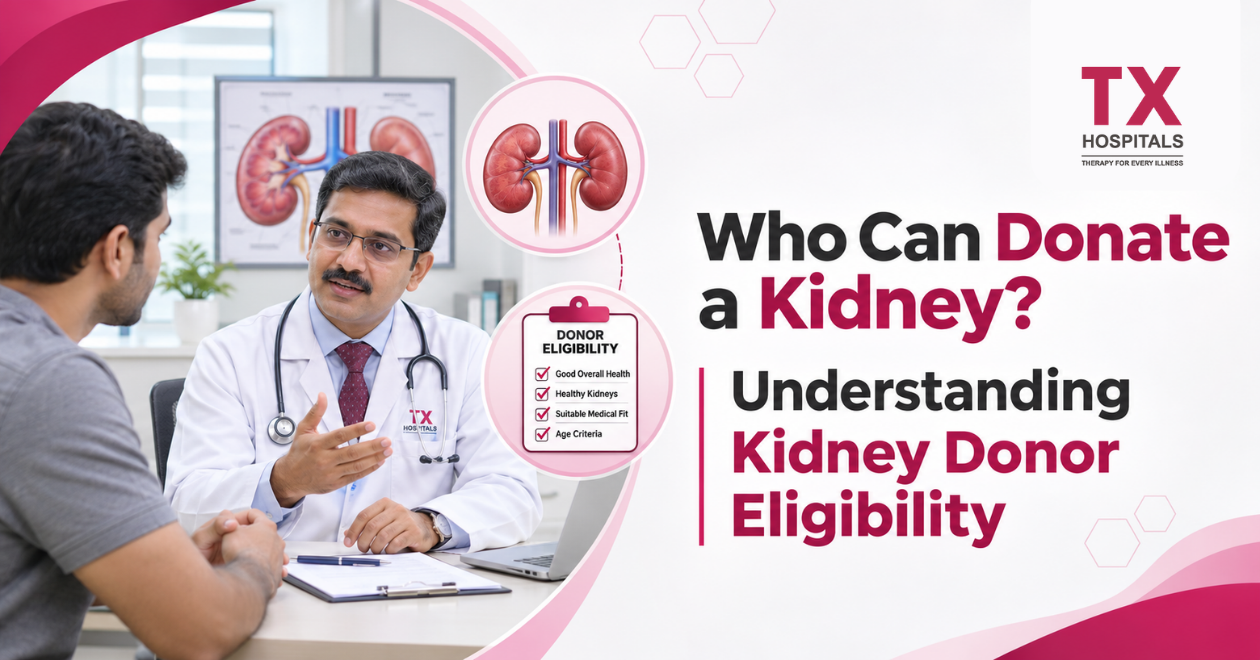
Who Can Donate a Kidney? Understanding Kidney Donor Eligibility
Introduction
A kidney transplant is an important treatment option for people with advanced kidney failure. It involves replacing a damaged kidney with a healthy kidney from a suitable donor. However, not everyone can donate a kidney. Donors must meet certain medical, physical and legal requirements to ensure their safety and the success of the transplant.
Kidney donation can come from a living donor or a deceased donor. Understanding who can donate, what tests are required and how donor compatibility is checked can help patients and their families make informed decisions.
Who Can Donate a Kidney?
A person may be eligible to donate a kidney if they are in good overall health and have normal kidney function. Donors must undergo a detailed medical evaluation to ensure that donating one kidney will not put their health at unnecessary risk.
There are two main types of kidney donors:
1. Living Kidney Donors
A living person can donate one of their kidneys to someone with kidney failure. Since most people can live a healthy life with one functioning kidney, living donation is possible for medically suitable individuals.
Living kidney donors may include:
- Parents
- Brothers and sisters
- Adult children
- Spouses
- Other relatives
- Non-related donors, subject to applicable legal approval
The donor must voluntarily agree to the procedure and undergo medical and psychological evaluation before approval.
2. Deceased Kidney Donors
A deceased donor is someone who has agreed to donate their organs after death, or whose donation is authorized according to applicable laws.
Kidneys from deceased donors may be given to suitable patients waiting for a transplant. Donor compatibility, medical suitability and organ allocation rules are considered during the process.
Patients exploring transplantation can contact TX Hospitals to understand the kidney transplant cost in Banjara Hills, donor evaluation and treatment options. The cost may vary depending on medical requirements and individual treatment plans.
What Are the Eligibility Criteria for Kidney Donation?
Before donating a kidney, a person needs to go through a few health checks to make sure it is safe for them.
1. Good Overall Health
The donor should be in good health and should not have any major medical problems that could make surgery risky or affect their health later.
2. Healthy Kidney Function
Blood and urine tests are performed to check how well the kidneys are working. Both kidneys should be healthy enough to allow the donor to live safely with one kidney.
3. Compatible Blood Group
Blood group compatibility is checked between the donor and recipient. However, some incompatible blood group transplants may be possible through specialised treatment protocols.
4. Suitable Tissue Matching
Human leukocyte antigen (HLA) testing helps assess tissue compatibility between the donor and recipient. A crossmatch test is also performed to check whether the recipient has antibodies that could react against the donor's kidney.
5. No Serious Uncontrolled Medical Conditions
Conditions such as uncontrolled diabetes, severe high blood pressure, active infections or certain kidney disorders may make donation unsafe. Each potential donor is assessed individually.
6. Voluntary Consent
Kidney donation must be voluntary. The donor should understand the procedure, possible risks and long-term responsibilities before giving informed consent.
What Tests Are Required Before Donating a Kidney?
A detailed medical evaluation helps determine whether a person is suitable for kidney donation.
Common tests include:
- Blood tests: Check kidney function, blood count, blood sugar and other health parameters.
- Urine tests: Help identify protein, blood or other signs of kidney problems.
- Blood group testing: Checks compatibility between the donor and recipient.
- Tissue matching: Evaluates HLA compatibility.
- Crossmatch testing: Checks for antibodies that may react against the donor kidney.
- Imaging tests: CT scans or other imaging may be used to examine kidney structure and blood vessels.
- Heart and general health assessments: Help determine whether the donor can safely undergo surgery.
These tests help the transplant team assess donor safety and identify potential risks before proceeding. For proper evaluation and guidance, consult a kidney transplant doctor in Banjara Hills, Hyderabad, at TX Hospitals.
Can a Person Donate a Kidney If Their Blood Group Is Different?
Yes, in some cases. Traditionally, kidney transplants are easier when the donor and recipient have compatible blood groups.
However, certain specialised transplant programmes may allow blood group-incompatible kidney transplantation. These procedures may require additional treatments to reduce antibodies in the recipient.
The transplant team evaluates the donor and recipient to determine whether this option is suitable.
Who Cannot Donate a Kidney?
Certain medical conditions may make kidney donation unsafe. These include:
- Poor kidney function or existing kidney disease.
- Uncontrolled diabetes.
- Severe or uncontrolled high blood pressure.
- Certain heart conditions.
- Active infections.
- Certain cancers or other serious medical conditions.
Having one of these conditions does not automatically determine eligibility in every situation. The final decision depends on individual medical assessment and applicable guidelines.
Can You Live a Normal Life With One Kidney?
Yes. Most healthy kidney donors can live normal and active lives with one functioning kidney.
After donation, the remaining kidney gradually adapts to handle more of the body's filtering needs. However, donors should attend regular health check-ups and monitor their blood pressure, kidney function and urine health.
Maintaining a healthy weight, eating a balanced diet, staying physically active and avoiding unnecessary use of medicines that can damage the kidneys are also important.
What Are the Risks of Donating a Kidney?
Kidney donation is generally safe for carefully selected individuals, but it is still a major surgical procedure.
Some possible risks include:
- Pain and discomfort after surgery.
- Bleeding or infection.
- Blood clots.
- Reactions to anaesthesia.
- A small risk of developing long-term kidney problems.
Before donating a kidney, it is important to understand the possible risks and receive proper medical guidance. TX Hospitals provides kidney transplant evaluation and care for patients looking for a kidney transplant hospital near Banjara Hills.
What Is the Recovery Time After Kidney Donation?
Recovery depends on the donor's overall health and the surgical method used.
Many donors stay in the hospital for a few days after surgery. They may gradually return to normal activities over the following weeks, depending on medical advice.
Heavy lifting and strenuous physical activity should be avoided until the doctor confirms that recovery is adequate. Regular follow-up appointments help monitor the donor's health.
Why Is Donor Evaluation Important Before a Kidney Transplant?
Donor evaluation is an essential step in kidney transplantation. It helps ensure that the donor is healthy enough to undergo surgery and that the donated kidney is suitable for the recipient.
Blood tests, kidney function assessments, tissue matching and other medical evaluations help the transplant team make informed decisions.
For patients and families exploring kidney transplantation, consulting an experienced transplant team can help clarify donor eligibility, testing requirements and available treatment options.
Consult TX Hospitals for Kidney Transplant Guidance
Finding a suitable kidney donor is an important part of the transplant journey. Both donors and recipients need proper medical evaluation, compatibility testing and guidance at every stage.
At TX Hospitals, Banjara Hills, Hyderabad, patients can seek guidance on kidney transplant evaluation, donor suitability and treatment options. Consult the specialist team to understand the next steps towards kidney transplantation.
Call 9144514459 to book an appointment.
Frequently Asked Questions
Disclaimer
The information provided in this blog is for general health awareness and educational purposes only. It should not be considered a substitute for professional medical advice, diagnosis or treatment. The content may not apply to every individual's health condition. Always consult a qualified healthcare professional for any medical concerns or treatment decisions. Do not ignore or delay medical advice based on the information shared in this blog.
Share this






Book Appointment
Categories
- Health Care
- Mother & Child
- Pediatric
- Health Days
- Urology
- Dental
- Gastroenterology
- Neurology
- Gynecology
- Orthopedics
- Cardiology
- Oncology
- Robotic Sciences
- Nephrology
- Rheumatology
- Pulmonology
- Cardiothoracic & Vascular Surgery
- Internal Medicine
- General Medicine
- Gastroeneterology
- Endocrinology
- Dermatology
- Pediatric Urologist
- Ophthalmology
- Gynecologist
- Ophthalmologist
- Ent
- Psychiatry
- Pediatrician
- Health Day
- Orthopaedics
- Spine Surgery
- General Physician
- Awarness Day
- Liver Transplantation Surgery
- Robotic Gastrointestinal (GI) Surgery
- Cardiac Sciences
- internal medicine
- General Surgeries
- Health care
- ENT
- cardiothoracic & vascular surgery
- Pediatric Neurologist
- Gastroenterologist
- Gynecology Hospitals
- oncology
- Trauma Surgeons
- Neuro Sciences
- Internal Madicine
- cardiac sciences
- Genecology
- Dietician
- Diabetology