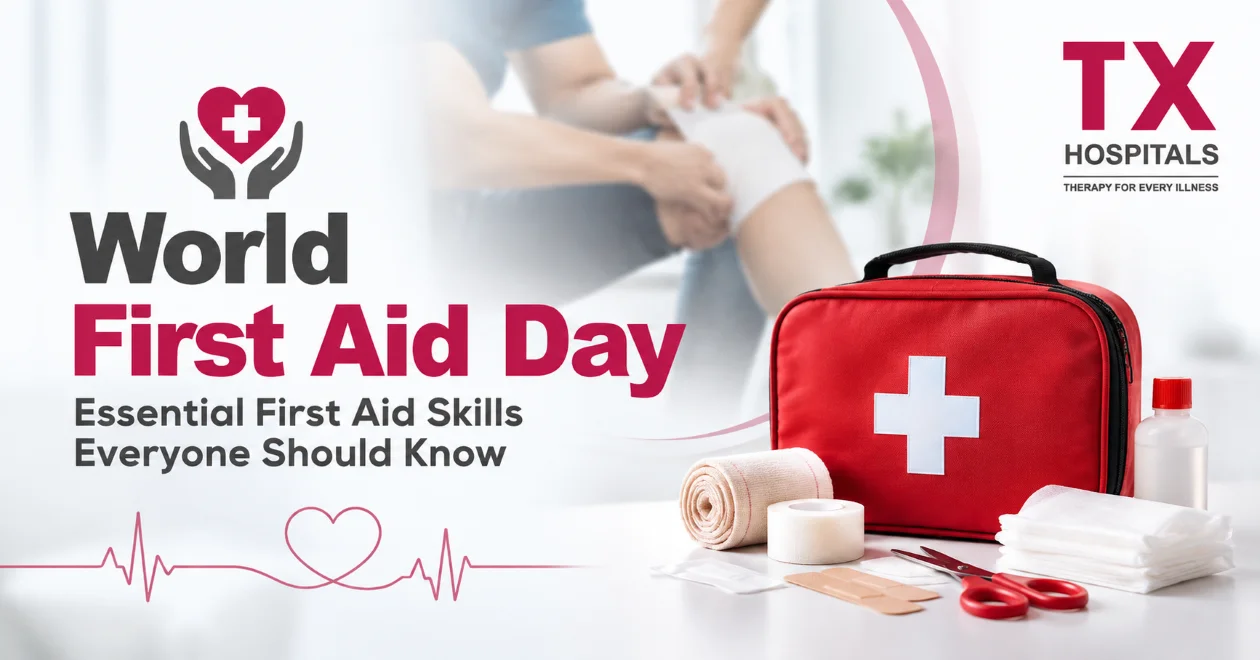
World First Aid Day: Essential First Aid Skills Everyone Should Know
Introduction
An accident can happen anywhere at home, at work, while travelling, or even during a regular day outside. In those first few minutes, knowing what to do can make a big difference. You may not be able to fix the problem completely, but basic first aid can help keep a person safe until medical help arrives.
World First Aid Day is observed every year to remind people that first aid is a useful skill for everyone, not just healthcare professionals. Knowing a few simple steps can help you stay calm and respond better during an emergency.
What Is First Aid?
First aid is the immediate care given to someone who is injured or suddenly becomes unwell. It is usually provided before professional medical help is available.
The aim is simple: keep the person safe, prevent the situation from getting worse and get medical help when needed.
First aid does not replace proper medical treatment. It is the support given in those important moments before a doctor, ambulance or emergency team takes over.
Why Is First Aid Important?
Emergencies can be confusing, especially when they happen unexpectedly. People may panic or be unsure about what they should do.
Basic first aid knowledge can help you:
- Stay calm when something unexpected happens
- Keep yourself and the injured person safe
- Give quick help for minor injuries
- Prevent the situation from getting worse
- Know when medical help is needed
- Support the person until trained medical help arrives
Simple first aid steps can help in an emergency, but serious cases need proper medical care. TX Hospitals, among the best multispecialty hospitals in Hyderabad, provides care for different medical emergencies and health conditions.
Essential First Aid Skills Everyone Should Know
1. Handling Bleeding
For a small cut, clean it gently and press a clean cloth or gauze over it. If the bleeding is heavy or does not stop, get medical help.
2. Helping With Burns
For a minor burn, hold the area under cool running water for around 20 minutes. Avoid putting ice, butter, toothpaste, or other home remedies on it. Serious burns should be checked by a doctor.
3. Learning CPR
If someone is unconscious and not breathing normally, call for emergency help immediately. If you know CPR, start it and keep going until help arrives. If there is an AED nearby, turn it on and follow the instructions.
4. Helping Someone Who Is Choking
A person who is choking may have trouble breathing, talking, or coughing. Stay calm and give them the right first aid. Call for emergency help if needed. If they become unconscious, start CPR if you know how.
5. Handling Fractures and Sprains
If you think someone has broken a bone, avoid moving the injured area too much. Keep it supported and get medical help as soon as possible.
For a minor sprain, give the injured area some rest and place a cold pack wrapped in a cloth on it. This can help reduce pain and swelling.
6. Helping Someone Who Faints
Help the person lie down safely and check that they are breathing. Do not give food or water while they are unconscious. Seek medical help if they do not recover quickly.
7. Recognising a Stroke
Remember FAST:
- F – Face: One side of the face droops
- A – Arms: One arm feels weak
- S – Speech: Speech becomes unclear
- T – Time: Get emergency medical help immediately
Knowing these basic steps can help you stay calm and respond quickly when an emergency happens.
What Should Be in a First Aid Kit?
It’s a good idea to keep a basic first aid kit at home, in your car, or at work. You can include:
- Band-aids
- Clean gauze
- Medical tape
- Antiseptic wipes
- Disposable gloves
- Scissors
- Tweezers
- Digital thermometer
- Cold pack
- Clean cloth or triangular bandage
- Basic first aid instructions
Check your kit from time to time and replace anything that has been used, damaged, or expired.
Common First Aid Mistakes to Avoid
Trying to help without knowing what to do can sometimes make things worse. Avoid:
- Putting ice directly on a burn
- Using things like toothpaste, butter, or other home remedies on burns or wounds
- Moving someone with a possible serious back or neck injury unless they are in immediate danger
- Giving food or water to someone who is unconscious
- Pulling out an object that is stuck deep in a wound
- Ignoring serious symptoms just because the person seems okay at first
- Waiting too long for medical help while trying home remedies
When you are unsure, getting professional medical help is safer than trying an unfamiliar procedure. TX Hospitals has experienced doctors and specialists, including some of the best doctors in Hyderabad, who can provide medical care when needed.
When Should You Call for Emergency Help?
First aid is not a substitute for emergency medical care. Call for urgent help when someone:
- Is unconscious or not breathing normally
- Has severe bleeding
- Has chest pain or severe breathing difficulty
- Shows signs of a stroke
- Has a serious burn
- Has a severe allergic reaction
- Has a major injury or suspected serious fracture
- Has a seizure that lasts unusually long or repeated seizures without recovery
- Suddenly becomes very confused or seriously unwell
Try to stay with the person and follow instructions from emergency medical professionals while help is on the way.
Learn First Aid Before You Need It
You do not need to be a doctor or nurse to learn basic first aid. A recognised first-aid or CPR course can give you the practical skills and confidence needed to respond during an emergency.
This World First Aid Day, take a few minutes to learn the basics, check your first aid kit and encourage your family members or coworkers to learn too.
Because emergencies rarely give us a warning but being prepared can help us respond when it matters.
TX Hospitals – Banjara Hills | Kachiguda | Uppal | Miyapur
📞 91445 14459
Book your consultation today.
Frequently Asked Questions
Disclaimer
The information provided in this blog is for general health awareness and educational purposes only. It should not be considered a substitute for professional medical advice, diagnosis or treatment. The content may not apply to every individual's health condition. Always consult a qualified healthcare professional for any medical concerns or treatment decisions. Do not ignore or delay medical advice based on the information shared in this blog.
Share this






Book Appointment
Categories
- Health Care
- Mother & Child
- Pediatric
- Health Days
- Urology
- Dental
- Gastroenterology
- Neurology
- Gynecology
- Orthopedics
- Cardiology
- Oncology
- Robotic Sciences
- Nephrology
- Rheumatology
- Pulmonology
- Cardiothoracic & Vascular Surgery
- Internal Medicine
- General Medicine
- Gastroeneterology
- Endocrinology
- Dermatology
- Pediatric Urologist
- Ophthalmology
- Gynecologist
- Ophthalmologist
- Ent
- Psychiatry
- Pediatrician
- Health Day
- Orthopaedics
- Spine Surgery
- General Physician
- Awarness Day
- Liver Transplantation Surgery
- Robotic Gastrointestinal (GI) Surgery
- Cardiac Sciences
- internal medicine
- General Surgeries
- Health care
- ENT
- cardiothoracic & vascular surgery
- Pediatric Neurologist
- Gastroenterologist
- Gynecology Hospitals
- oncology
- Trauma Surgeons
- Neuro Sciences
- Internal Madicine
- cardiac sciences
- Genecology
- Dietician
- Diabetology