World Lung Cancer Day: Who Should Consider Lung Cancer Screening?
Lung cancer often develops quietly. In many people, symptoms appear only after the disease has progressed. This is why early detection is an important focus on World Lung Cancer Day, observed every year on August 1.
Lung cancer screening can help detect abnormal changes in the lungs before symptoms begin. However, screening is not required for everyone. It is mainly recommended for people who have a higher risk because of their age, smoking history or long-term exposure to harmful substances.
Why Is Lung Cancer Screening Important?
Early-stage lung cancer may not cause a persistent cough, breathing difficulty or chest pain. By the time symptoms become noticeable, the condition may already be advanced.
Screening gives doctors an opportunity to identify small lung nodules or suspicious changes at an earlier stage. When lung cancer is detected early, patients may have more treatment options, including surgery in suitable cases.
Which Test Is Used for Lung Cancer Screening?
A low-dose CT scan, also known as an LDCT scan, is commonly used for lung cancer screening.
It:
- Gives clear and detailed images of the lungs
- Uses less radiation than a regular CT scan
- Can detect very small lung nodules
- Is painless and takes only a few minutes
A regular chest X-ray may miss small or early changes in the lungs, so it is not a replacement for a low-dose CT scan.
Who Should Consider Lung Cancer Screening?
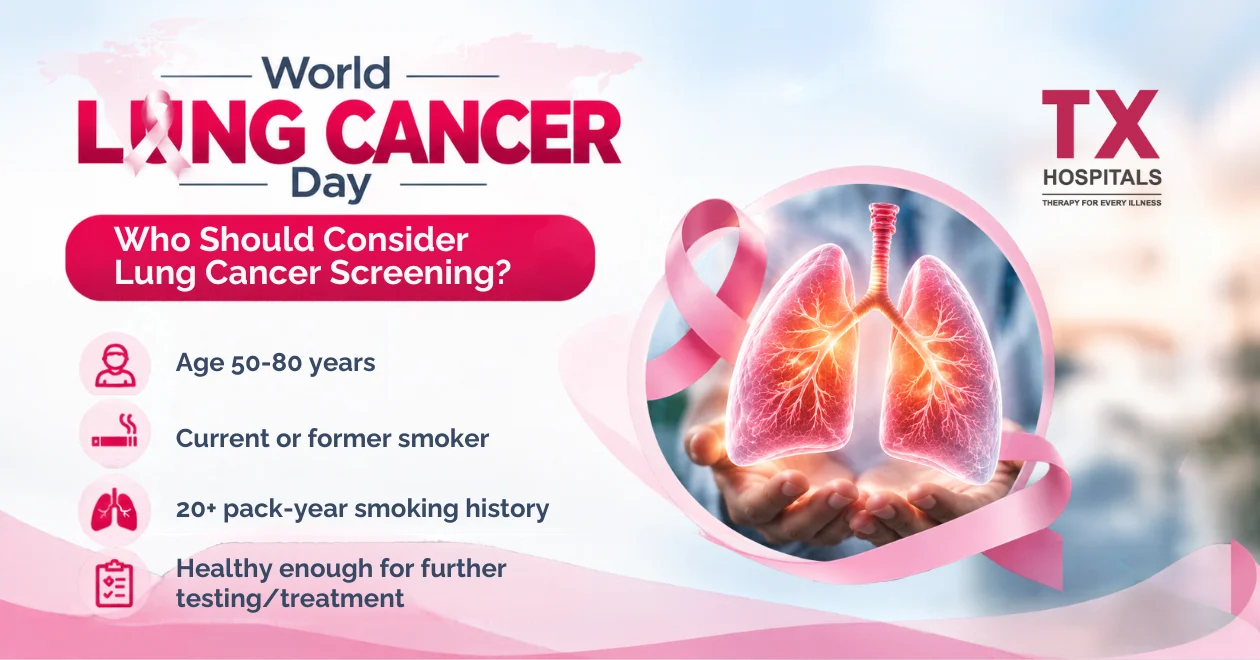
You may need to discuss with a doctor about lung cancer screening if you:
- Are between 50 and 80 years old
- Currently smoke
- Smoked regularly in the past
- Have a smoking history of 20 pack-years or more
- Are healthy enough to undergo further tests or treatment if needed
The need for screening depends on your age, smoking history and overall health. At TX Hospitals, patients can consult some of the best pulmonologists in Hyderabad for personalised screening advice.
Should Former Smokers Get Screened?
Quitting smoking greatly improves health and lowers the risk of lung cancer. However, the risk may remain for several years after stopping.
Former smokers with a significant smoking history may still be advised to undergo annual low-dose CT screening. Eligibility depends on age, total tobacco exposure, overall health and how long ago the person stopped smoking.
Quitting smoking should never be seen as a reason to ignore screening advice.
Can Non-Smokers Develop Lung Cancer?
Yes. Although smoking is the most common risk factor, lung cancer can also affect people who have never smoked.
Other risk factors include:
- Long-term exposure to second-hand smoke
- Air pollution
- Exposure to asbestos, silica, arsenic or diesel fumes
- Previous radiation therapy to the chest
- A family history of lung cancer
- Chronic lung conditions
- Workplace exposure to harmful chemicals
Routine yearly lung cancer screening is not recommended for every non-smoker. However, people with strong risk factors should consult a pulmonologist for an individual assessment.
When Symptoms Need Medical Evaluation
Lung cancer screening is intended for high-risk people who do not have symptoms.
Anyone already experiencing warning signs needs a medical evaluation rather than a routine screening test.
See a doctor if you notice any of these symptoms:
- A cough that does not go away
- Coughing up blood
- Chest pain without a clear reason
- Shortness of breath that is getting worse
- Frequent chest infections
- Wheezing that continues
- Weight loss without trying
- Poor appetite
- Feeling weak or tired most of the time
- A sudden change in your voice
These symptoms may be caused by different lung conditions and do not always indicate cancer. As one of the best lung hospitals in Hyderabad, TX Hospitals offers timely evaluation and specialised respiratory care.
Does a Lung Nodule Always Mean Cancer?
No. Most lung nodules are not cancerous.
They may develop because of:
- Previous infections
- Inflammation
- Lung scarring
- Tuberculosis
- Other non-cancerous conditions
If a nodule is detected, the doctor may recommend monitoring it with another CT scan. In certain cases, further tests such as PET-CT, bronchoscopy or biopsy may be required.
What Are the Benefits of Lung Cancer Screening?
For eligible high-risk individuals, lung cancer screening may help:
- Detect lung cancer before symptoms develop
- Identify smaller tumours
- Improve the possibility of early treatment
- Reduce the risk of death from lung cancer
- Provide timely follow-up for suspicious lung nodules
Screening is most useful when a person is medically fit and willing to undergo further evaluation or treatment if an abnormality is found.
Can Screening Prevent Lung Cancer?
Screening cannot prevent lung cancer. It helps detect the disease early.
The most effective way to lower the risk is to stop smoking and avoid tobacco in every form. People should also reduce exposure to second-hand smoke, air pollution and harmful workplace chemicals wherever possible.
Even after a normal screening result, continuing to smoke can increase future risk.
Lung Cancer Screening at TX Hospitals
TX Hospitals offers specialised evaluation for people at risk of lung cancer. Our pulmonologists, radiologists and oncology specialists work together to assess symptoms, review smoking history, recommend appropriate imaging and plan further investigations when needed.
Early evaluation can help detect lung problems before they become more serious.
Book a lung cancer screening consultation today.
Call: +91 91445 14459
TX Hospitals – Banjara Hills | Kachiguda | Uppal | Miyapur
Frequently Asked Questions
Disclaimer
The information provided in this blog is for general health awareness and educational purposes only. It should not be considered a substitute for professional medical advice, diagnosis or treatment. The content may not apply to every individual's health condition. Always consult a qualified healthcare professional for any medical concerns or treatment decisions. Do not ignore or delay medical advice based on the information shared in this blog.
Share this






Book Appointment
Categories
- Health Care
- Mother & Child
- Pediatric
- Health Days
- Urology
- Dental
- Gastroenterology
- Neurology
- Gynecology
- Orthopedics
- Cardiology
- Oncology
- Robotic Sciences
- Nephrology
- Rheumatology
- Orthopaedics
- Pulmonology
- Internal Medicine
- General Medicine
- Gastroeneterology
- Endocrinology
- Dermatology
- Pediatric Urologist
- Ophthalmology
- Gynecologist
- Ophthalmologist
- Ent
- Psychiatry
- Pediatrician
- Health Day
- General Physician
- Awarness Day
- Liver Transplantation Surgery
- internal medicine
- General Surgeries
- Health care
- ENT
- cardiothoracic & vascular surgery
- Pediatric Neurologist
- Gastroenterologist
- Gynecology Hospitals
- oncology
- Trauma Surgeons
- Neuro Sciences
- Internal Madicine
- cardiac sciences
- Genecology
- Dietician
- Diabetology