World Rabies Day: What Should You Do Immediately After a Dog Bite?

A dog bite can happen suddenly, and it is easy to panic when it does. Whether the bite is from a pet or a stray dog, knowing what to do in the first few minutes can make a big difference.
Observed every year on September 28, World Rabies Day raises awareness about rabies prevention and the importance of timely vaccination. Rabies is a serious viral infection that spreads mainly through the saliva of an infected animal, usually through a bite or scratch.
The important thing to remember is that rabies can be prevented when the right care is taken quickly after exposure
Why should a Dog bite be taken seriously?
Not every dog bite leads to rabies, but it is difficult to know whether an animal is infected just by looking at it.
Rabies can spread when infected saliva enters the body through broken skin or comes into contact with the eyes, mouth or another mucous membrane. Dogs are responsible for most human rabies cases worldwide.
Once symptoms of rabies appear, the disease is almost always fatal. This is why treatment should begin based on medical advice before symptoms develop.
What should you do immediately after a Dog bite?
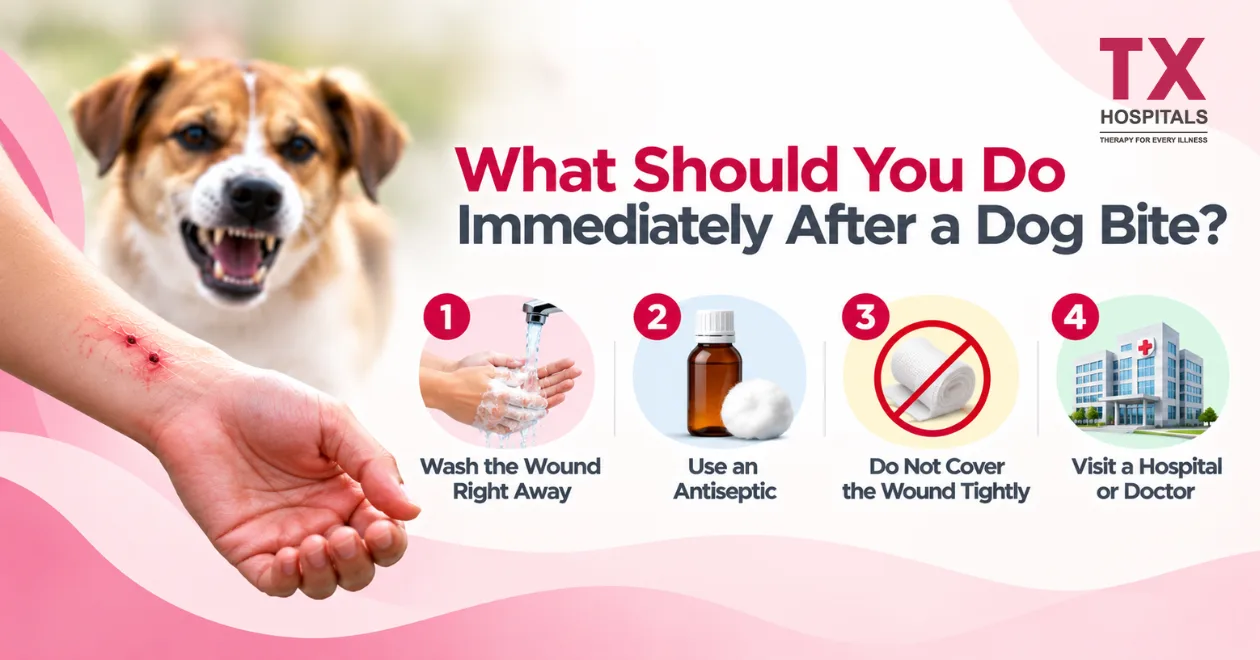
The first few steps after a dog bite are important. Here is what you should do:
1. Wash the Wound Right Away
Wash and flush the bite or scratch thoroughly with soap and running water for about 15 minutes.
Good wound cleaning helps remove saliva, dirt and other contaminants from the area and can reduce the risk of infection.
2. Use an Antiseptic
After washing the wound, an antiseptic such as povidone-iodine may be used if available.
Avoid applying substances such as chilli powder, turmeric, oil, soil or other home remedies to the wound. These do not prevent rabies and may irritate or contaminate the injury.
3. Do Not Cover the Wound Tightly
Avoid tightly bandaging the bite unless needed to control significant bleeding. If the wound is bleeding heavily, apply gentle pressure with a clean cloth or dressing and seek medical attention immediately.
4. Visit a Hospital or Doctor as Soon as Possible
Do not wait for symptoms or assume that a small bite is harmless. A doctor will assess the wound, how the exposure happened and the animal involved. TX Hospitals, one of the best multispecialty hospitals in Hyderabad, provides timely medical evaluation and care for animal bites and possible rabies exposure.
Depending on the type of exposure and your previous vaccination history, you may need rabies vaccination and, in some cases, rabies immunoglobulin.
Do You Need a Rabies Vaccine after every Dog Bite?
The need for vaccination depends on the type of contact and the risk of rabies exposure.
A doctor may consider factors such as:
- Whether the skin was broken
- How deep the bite or scratch is
- Whether saliva touched broken skin or mucous membranes
- Whether the dog is known and available for observation
- The animal's vaccination status
- Whether you have previously received rabies vaccination
Even a small scratch should not simply be ignored. Get medical advice so the appropriate post-exposure treatment can be decided.
What Is Rabies Post-Exposure Prophylaxis (PEP)?
Post-exposure prophylaxis, commonly called PEP, is the treatment given after a possible rabies exposure.
Depending on the exposure, it can include proper wound washing, a course of rabies vaccination and rabies immunoglobulin for certain higher-risk exposures in people who have not previously been vaccinated.
It is important to follow the recommended vaccine schedule and complete all doses advised by your healthcare provider.
Can you get Rabies From a Vaccinated Pet Dog?
A properly vaccinated and healthy pet dog generally presents a much lower risk, but a bite should still be cleaned properly and medically assessed.
Do not skip medical advice simply because the dog is a pet. Your doctor can decide what further care is needed based on the circumstances of the bite and local rabies guidance.
What About Tetanus and Wound Infection?
A dog bite can cause more than just a rabies risk. The wound can also become infected with bacteria.
Depending on the bite, your doctor may recommend a tetanus booster or antibiotics to prevent or treat infection. For proper wound assessment, you can consult the best general physicians in Hyderabad at TX Hospitals and get the right care based on the severity of the bite.
Keep an eye on the wound. If you notice redness, swelling, warmth, increasing pain, pus or fever, get medical attention promptly.
What should you avoid after a Dog Bite?
Some common mistakes can delay proper treatment. After a dog bite:
- Do not wait for rabies symptoms to appear
- Do not depend only on home remedies
- Do not apply irritants to the wound
- Do not delay medical evaluation
- Do not stop the rabies vaccine schedule without medical advice
- Do not try to catch an aggressive or unfamiliar dog yourself
When should you seek urgent Medical Care?
Medical evaluation is recommended after any possible rabies exposure. Seek urgent care especially if the bite is deep, bleeding heavily, involves multiple wounds, or affects the face, head, neck, hands or fingers.
Children who have been bitten should also be assessed promptly, as they may not always explain exactly what happened.
World Rabies Day: Awareness can save lives
World Rabies Day is an important reminder that rabies prevention starts with quick action after an animal bite.
Wash the wound thoroughly, avoid unproven home remedies and seek medical care without delay. When recommended, timely rabies vaccination and appropriate post-exposure treatment can prevent the disease.
A dog bite may happen in seconds, but what you do next matters. Act early, get medical advice and stay protected.
Frequently Asked Questions
Disclaimer
The information provided in this blog is for general health awareness and educational purposes only. It should not be considered a substitute for professional medical advice, diagnosis or treatment. The content may not apply to every individual's health condition. Always consult a qualified healthcare professional for any medical concerns or treatment decisions. Do not ignore or delay medical advice based on the information shared in this blog.
Share this






Book Appointment
Categories
- Health Care
- Mother & Child
- Pediatric
- Health Days
- Urology
- Dental
- Gastroenterology
- Neurology
- Gynecology
- Orthopedics
- Cardiology
- Oncology
- Robotic Sciences
- Nephrology
- Rheumatology
- Orthopaedics
- Pulmonology
- Internal Medicine
- General Medicine
- Gastroeneterology
- Endocrinology
- Dermatology
- Pediatric Urologist
- Ophthalmology
- Gynecologist
- Ophthalmologist
- Ent
- Psychiatry
- Pediatrician
- Health Day
- General Physician
- Awarness Day
- Liver Transplantation Surgery
- internal medicine
- General Surgeries
- Health care
- ENT
- cardiothoracic & vascular surgery
- Pediatric Neurologist
- Gastroenterologist
- Gynecology Hospitals
- oncology
- Trauma Surgeons
- Neuro Sciences
- Internal Madicine
- cardiac sciences
- Genecology
- Dietician
- Diabetology