World Spine Day 2026: Common Spine Problems You Shouldn’t Ignore
Back pain, neck stiffness and tingling in the arms or legs are common problems that many people tend to ignore. Sometimes these symptoms improve with rest, but in other cases, they may be early signs of a spine condition that needs medical attention.
Observed every year on October 16, World Spine Day raises awareness about spinal health, prevention of spine problems and the importance of seeking timely care.
The spine supports your body, protects the spinal cord and helps you move, bend, sit and walk. When something affects the spine, it can interfere with daily activities, work, sleep and overall quality of life.
This World Spine Day, understanding common spine problems and their warning signs can help you know when it is time to consult a specialist.
Why is Spine Health important?
The spine is made up of bones called vertebrae, along with discs, joints, muscles, ligaments and nerves.
Together, these structures provide stability and movement while protecting the spinal cord.
Poor posture, ageing, injuries, long hours of sitting, repetitive movements and certain medical conditions can gradually affect spine health.
Some spine problems are mild and temporary. Others may worsen over time and lead to nerve compression, persistent pain or reduced mobility.
Early evaluation can help identify the cause and prevent symptoms from becoming more severe.
Common Spine problems you shouldn’t ignore
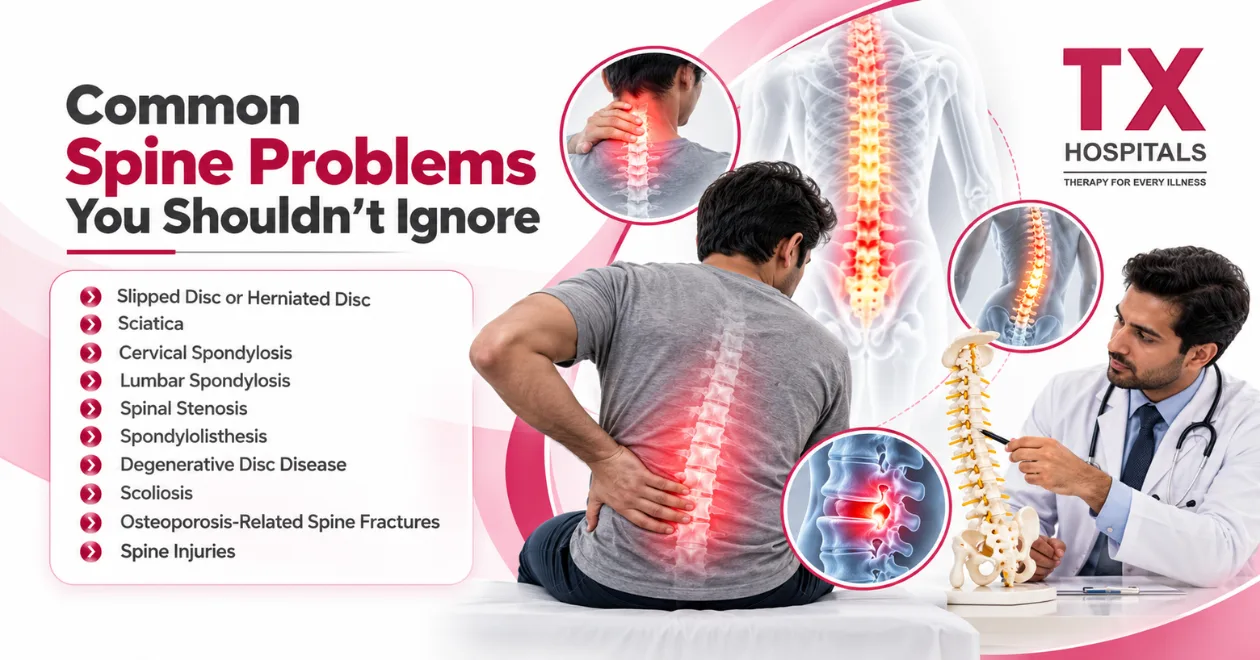
1. Slipped Disc or Herniated Disc
The discs between the vertebrae act like cushions and help absorb pressure.
A herniated disc, commonly called a slipped disc, occurs when the inner part of a spinal disc pushes through its outer layer.
This can irritate or compress nearby nerves.
Common symptoms include:
- Lower back or neck pain
- Pain spreading into the leg or arm
- Tingling or numbness
- Muscle weakness
- Pain that worsens while bending, coughing or sitting
When a herniated disc affects the lower back, it may cause sciatica, where pain travels from the lower back into the buttock and leg.
Persistent radiating pain or weakness should be medically evaluated.
2. Sciatica
Sciatica is not a disease itself. It refers to pain caused by irritation or compression of the sciatic nerve.
The sciatic nerve travels from the lower back through the hips and down each leg.
Symptoms can include:
- Sharp or burning pain in one leg
- Tingling or numbness
- Lower back pain
- Leg weakness
- Pain that increases while sitting for long periods
Sciatica may be caused by a slipped disc, narrowing of the spine or other lower back problems. If the pain does not improve or starts affecting your daily routine, it is better to get medical advice.
TX Hospitals, one of the top neurology hospitals in Hyderabad, offers evaluation and care for sciatica and related nerve problems.
3. Cervical Spondylosis
Cervical spondylosis refers to age-related wear and tear affecting the neck portion of the spine.
It may involve the spinal discs, joints and bones in the neck.
Common symptoms include:
- Neck pain
- Neck stiffness
- Headache starting from the back of the head
- Shoulder pain
- Tingling or numbness in the arms or hands
- Weakness in the hands
Many people experience mild cervical spondylosis as they age. However, symptoms caused by nerve or spinal cord compression should not be ignored.
4. Lumbar Spondylosis
Lumbar spondylosis affects the lower back and usually develops due to age-related changes in the spine.
These changes may include degeneration of spinal discs, formation of bone spurs and stiffness in the spinal joints.
Symptoms may include:
- Lower back pain
- Morning stiffness
- Difficulty bending
- Pain after sitting or standing for long periods
- Pain spreading to the legs
Lifestyle changes, physiotherapy, medications and other treatments may help depending on the severity of the condition.
5. Spinal Stenosis
Spinal stenosis occurs when the spaces within the spine become narrow.
This narrowing can place pressure on the spinal cord or nerves.
Spinal stenosis commonly affects the neck or lower back.
Symptoms may include:
- Back or neck pain
- Numbness or tingling
- Leg pain while walking
- Weakness
- Difficulty standing for long periods
- Relief when sitting or bending forward
Severe spinal stenosis can affect walking and balance.
Early diagnosis can help determine whether conservative treatment or more advanced intervention is required.
6. Spondylolisthesis
Spondylolisthesis occurs when one vertebra slips forward over the vertebra below it.
It may develop due to degeneration, injury or structural changes in the spine.
Symptoms can include:
- Lower back pain
- Tight hamstrings
- Leg pain
- Numbness
- Difficulty standing or walking
- Muscle weakness
Some people may have spondylolisthesis without symptoms, while others can develop significant pain and nerve-related problems.
7. Degenerative Disc Disease
Despite its name, degenerative disc disease is usually related to gradual wear and tear rather than an actual disease.
As spinal discs age, they may lose flexibility and cushioning.
Symptoms may include:
- Persistent back or neck pain
- Pain that worsens while sitting
- Pain during bending or lifting
- Periods of severe pain followed by improvement
- Pain spreading into the arms or legs
Treatment depends on the symptoms and whether nearby nerves are affected. For proper evaluation, you can consult TX Hospitals, with some of the best neurology specialists in Hyderabad, for appropriate care and treatment.
8. Scoliosis
Scoliosis is an abnormal sideways curvature of the spine.
It often develops during childhood or adolescence, although adults can also develop scoliosis because of age-related spinal changes.
Signs may include:
- Uneven shoulders
- One hip appearing higher
- Uneven waist
- Visible spinal curvature
- Back pain in adults
Mild scoliosis may only require observation. More significant curves may require bracing, physiotherapy or surgery depending on the individual case.
9. Osteoporosis-Related Spine Fractures
Osteoporosis weakens bones and increases the risk of fractures.
The vertebrae of the spine are particularly vulnerable.
A spinal compression fracture may occur after a minor fall, bending or lifting and sometimes even without a noticeable injury.
Warning signs can include:
- Sudden severe back pain
- Loss of height
- Stooped posture
- Persistent back discomfort
Older adults and people with osteoporosis should not ignore sudden back pain.
Early diagnosis can help prevent further fractures.
10. Spine Injuries
Falls, road traffic accidents, sports injuries and workplace injuries can affect the spine.
Some injuries may appear minor at first but can lead to ongoing pain or nerve-related symptoms.
Seek medical evaluation if an injury causes:
- Severe neck or back pain
- Numbness
- Weakness
- Difficulty moving
- Loss of balance
- Pain spreading into the arms or legs
Spinal injuries involving the spinal cord require urgent medical attention.
Warning signs of a serious Spine problem
Back or neck pain should be checked by a doctor if you have:
- Pain that is severe or doesn’t improve
- Pain spreading to the arms or legs
- Numbness or tingling
- Weakness in the arms or legs
- Trouble walking or maintaining balance
- Pain after an injury
- Fever or unexplained weight loss with back pain
What causes Spine problems?
Several factors can increase the risk of spinal problems.
These include:
- Sitting for long hours
- Poor posture
- Not being physically active
- Being overweight
- Lifting heavy things the wrong way
- Repeating the same movements often
- Weak core muscles
- Previous back or spine injuries
- Age-related changes
- Smoking
- Osteoporosis
- Certain inherited conditions
If you spend most of your day at a desk, use your phone or laptop for long hours, or do a lot of physical work, you may be more likely to experience back or neck discomfort.
How are Spine problems diagnosed?
A doctor will usually begin by asking about your symptoms, how long you have had them and whether anything makes the pain better or worse.
A physical examination may be done to check movement, muscle strength, reflexes and sensation.
Depending on the symptoms, further tests such as an X-ray, MRI or CT scan may be recommended. Imaging is not necessary for every episode of back or neck pain, so the tests required can vary from person to person.
Does every Spine problem need surgery?
Not always. Many spine problems improve with medicines, physiotherapy, exercise and changes in daily activities.
Surgery is usually considered only when other treatments are not helping or when there is serious pressure on the nerves.
If surgery needs to be considered, the best neurosurgeons in Hyderabad at TX Hospitals can assess the condition and suggest the right treatment based on the individual’s symptoms.
How to protect your Spine every say
Small lifestyle changes can help reduce strain on the spine.
Maintain Good Posture
Keep your shoulders relaxed and avoid leaning forward for long periods.
When sitting, keep your feet supported and your lower back comfortably aligned.
Take Regular Breaks
If you work at a desk, avoid sitting continuously for several hours.
Stand, stretch and walk briefly at regular intervals.
Strengthen Your Core
Strong abdominal and back muscles provide better support for your spine.
Regular exercises recommended by a physiotherapist can help improve stability.
Lift Correctly
Avoid bending directly from your waist while lifting heavy objects.
Bend your knees, keep the object close to your body and avoid sudden twisting movements.
Maintain a Healthy Weight
Excess body weight can place additional strain on the lower back.
A balanced diet and regular physical activity can support both spine health and overall wellbeing.
Stay Physically Active
Walking, swimming, stretching and other low-impact activities can support spinal mobility and muscle strength.
This World Spine Day, don’t ignore persistent pain
World Spine Day is a reminder that spine health plays an important role in almost every movement we make.
Back pain, neck pain, numbness and stiffness may seem manageable at first, but persistent or worsening symptoms should not simply be accepted as part of daily life.
Paying attention to warning signs, maintaining good posture, staying active and seeking timely medical advice can help protect your spine and mobility.
At TX Hospitals, our spine specialists provide comprehensive evaluation and personalised treatment for back pain, neck pain, slipped discs, sciatica, spinal stenosis and other spine-related conditions.
Experiencing persistent back or neck pain? Book a consultation with a spine specialist at TX Hospitals for expert evaluation and appropriate treatment.
Frequently Asked Questions
Disclaimer
The information provided in this blog is for general health awareness and educational purposes only. It should not be considered a substitute for professional medical advice, diagnosis or treatment. The content may not apply to every individual's health condition. Always consult a qualified healthcare professional for any medical concerns or treatment decisions. Do not ignore or delay medical advice based on the information shared in this blog.
Share this






Book Appointment
Categories
- Health Care
- Mother & Child
- Pediatric
- Health Days
- Urology
- Dental
- Gastroenterology
- Neurology
- Gynecology
- Orthopedics
- Cardiology
- Oncology
- Robotic Sciences
- Nephrology
- Rheumatology
- Orthopaedics
- Pulmonology
- Internal Medicine
- General Medicine
- Gastroeneterology
- Endocrinology
- Dermatology
- Pediatric Urologist
- Ophthalmology
- Gynecologist
- Ophthalmologist
- Ent
- Psychiatry
- Pediatrician
- Health Day
- General Physician
- Awarness Day
- Liver Transplantation Surgery
- internal medicine
- General Surgeries
- Health care
- ENT
- cardiothoracic & vascular surgery
- Pediatric Neurologist
- Gastroenterologist
- Gynecology Hospitals
- oncology
- Trauma Surgeons
- Neuro Sciences
- Internal Madicine
- cardiac sciences
- Genecology
- Dietician
- Diabetology