World Trauma Day 2026: Warning Signs After an Accident You Should Never Ignore
Introduction
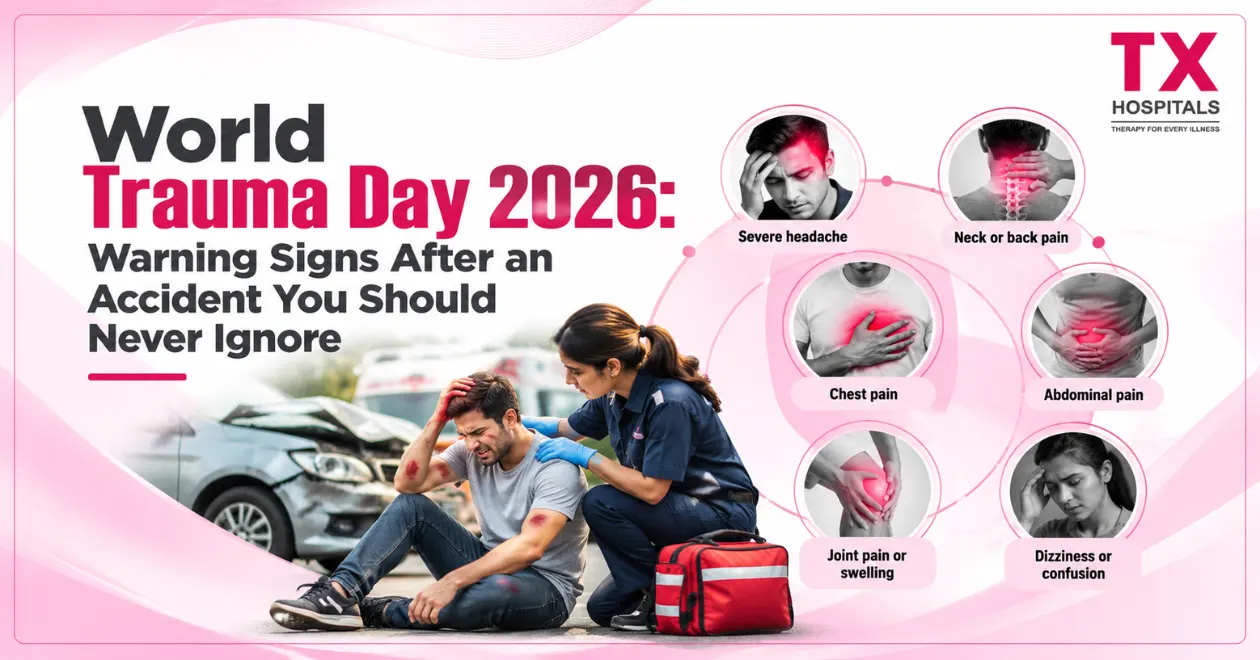
An accident can happen in seconds, but its effects may last much longer. Whether it is a road accident, a fall or an injury at work, not all injuries are immediately visible. Sometimes, a person may feel fine after an accident, only to develop pain, dizziness or other symptoms hours later.
Observed every year on October 17, World Trauma Day raises awareness about preventing injuries, recognising serious trauma and the importance of timely emergency medical care.
World Trauma Day 2026 is an opportunity to understand why even seemingly minor accidents should not be taken lightly. Knowing the warning signs after an accident can help you recognise when medical attention is needed and prevent potentially serious complications.
Why Do Some Injuries Appear Hours After an Accident?
After an accident, the body releases stress hormones, including adrenaline, which can temporarily reduce the feeling of pain. Because of this, some people may not immediately realise they are injured.
Certain injuries, such as internal bleeding, concussions and soft tissue damage, may also take time to produce noticeable symptoms.
For example, a person involved in a road accident may initially feel normal but later experience headaches, neck pain, abdominal discomfort or dizziness.
This is why it is important to pay attention to any new or worsening symptoms after an accident, even when there are no visible wounds.
7 Warning Signs After an Accident You Should Never Ignore
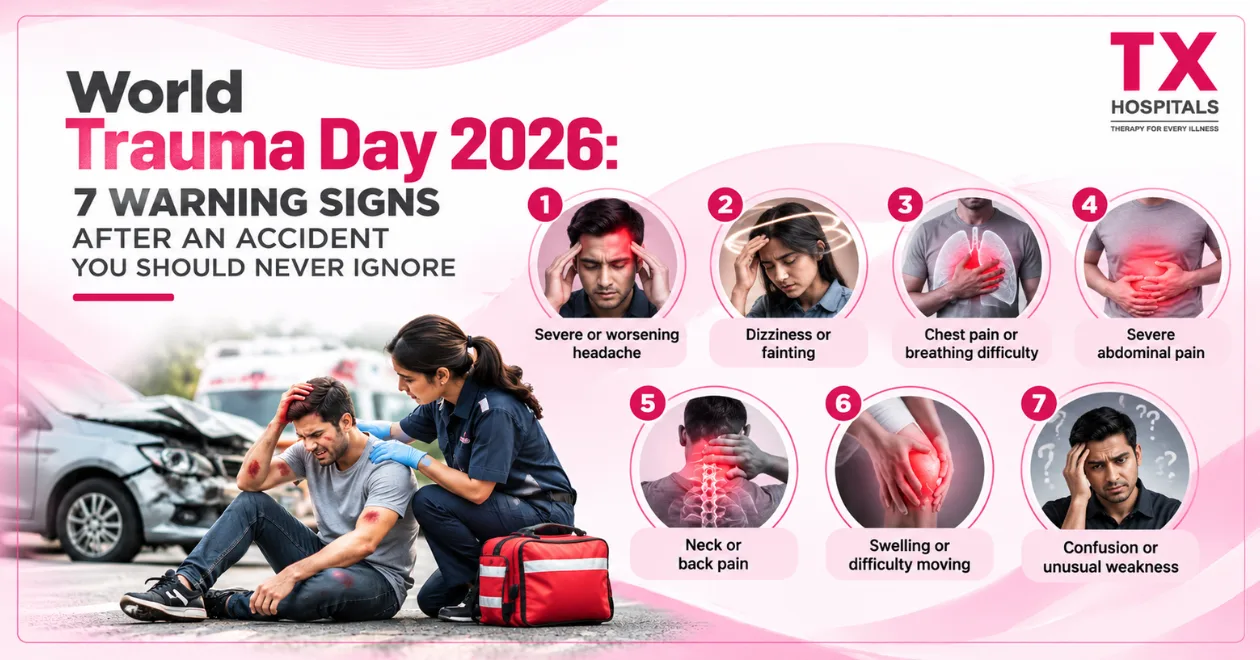
1. Severe or Persistent Headache
A headache after an accident may occur due to a minor injury, but it can sometimes indicate a concussion or a more serious brain injury.
Warning signs include:
- A headache that keeps getting worse
- Repeated vomiting
- Confusion or unusual behaviour
- Difficulty speaking or concentrating
- Loss of consciousness
- Seizures
A worsening headache or any of these serious symptoms after a head injury requires immediate emergency evaluation.
2. Dizziness, Fainting or Loss of Consciousness
Feeling dizzy after an accident should not be ignored, particularly if the person has hit their head.
Dizziness may occur due to a concussion, blood loss or changes in blood pressure.
Seek emergency medical attention if someone experiences fainting, repeated dizziness, unusual drowsiness or difficulty staying awake.
Even a brief loss of consciousness following a head injury needs medical assessment.
3. Chest Pain or Difficulty Breathing
Chest injuries can occur during road accidents, falls or direct impacts to the upper body.
Pain in the chest may result from bruising or rib injuries, but it can also indicate more serious damage involving the lungs or other internal organs.
Watch for:
- Severe pain in the chest
- Trouble breathing normally
- Chest pain that gets worse when taking a breath
- Breathing faster than usual
- Blood when coughing
These symptoms may indicate a serious chest injury and require immediate medical care.
4. Severe Abdominal Pain or Swelling
Internal injuries are not always visible from the outside.
A strong impact to the abdomen can sometimes damage organs such as the liver, spleen or kidneys.
Symptoms that need urgent attention include:
- Severe stomach pain that gets worse
- Swelling or pain when touching the stomach
- Feeling dizzy or fainting
- Feeling unusually weak
- Pale skin, cold sweats or clamminess
These could be signs of internal bleeding or injury to an organ. Seek emergency medical care right away, even if the pain is not severe.
5. Neck or Back Pain After an Accident
Neck and back injuries are common after road accidents and falls.
While some injuries involve muscle strain, others may affect the spine, spinal cord or surrounding nerves.
Warning signs include:
- Severe pain in the neck or back
- Tingling or loss of feeling in the arms or legs
- Feeling weak in the arms or legs
- Trouble walking or moving normally
- Difficulty controlling urine or bowel movements
Suspected spinal injuries need immediate medical attention. Avoid moving the injured person and seek emergency help. At TX Hospitals, you can consult top neurology doctors in Hyderabad for spine and nerve-related concerns.
6. Swelling, Severe Pain or Difficulty Moving a Limb
Pain and swelling after an accident may indicate a fracture, dislocation or injury to the muscles and ligaments.
Some fractures may not cause obvious deformity, making them difficult to identify without medical examination.
Symptoms may include:
- Severe pain in a bone or joint
- Swelling or bruising around the injured area
- Trouble moving the injured body part
- Difficulty standing or putting weight on the injured leg
- An arm or leg that looks bent or out of place
A doctor may recommend an X-ray or other tests to check for injuries and decide on the right treatment.
7. Unusual Weakness, Confusion or Changes in Behaviour
Sometimes, the most serious warning signs after an accident are not related to visible injuries.
A person may become unusually quiet, confused, restless or extremely tired.
These changes can occur due to head injuries, shock, blood loss or other serious medical problems.
Sudden confusion, worsening weakness, difficulty speaking or reduced responsiveness should always be treated as emergency warning signs.
Hidden Injuries After an Accident: What Should You Know?
Not every serious injury causes immediate pain or visible bleeding. Some injuries may remain unnoticed during the first few hours.
Common hidden injuries include:
Concussion: A brain injury that may cause headaches, dizziness, confusion, nausea or memory problems.
Internal bleeding: Bleeding inside the body that may cause abdominal pain, weakness, dizziness or fainting. Severe bleeding can be life-threatening.
Whiplash: A neck injury caused by sudden movement of the head, commonly seen in vehicle collisions. Symptoms may develop gradually.
Internal organ injuries: Damage to organs such as the liver, spleen or lungs following a strong impact.
Soft tissue injuries: Damage to muscles, ligaments and tendons that may cause pain, swelling and stiffness after some time.
Some injuries may not show symptoms right away. At TX Hospitals, one of the best superspecialty hospitals in Hyderabad, patients can get timely evaluation and treatment for accident-related injuries.
What Should You Do Immediately After an Accident?
Knowing what to do after an accident can help protect the injured person from further harm.
Here are a few important steps:
- Check for danger: Make sure the surroundings are safe before approaching the injured person.
- Call emergency services: Seek immediate help for serious injuries, unconsciousness, breathing difficulties or heavy bleeding.
- Avoid unnecessary movement: Do not move someone with a suspected neck, back or spinal injury unless there is immediate danger.
- Control external bleeding: Apply firm, direct pressure using a clean cloth or dressing when appropriate.
- Do not give food or water: Avoid giving anything by mouth to someone who is seriously injured, drowsy or may need emergency treatment.
- Watch for changes: Monitor breathing, consciousness and any worsening symptoms until medical help arrives.
When Should You Visit the Emergency Department After an Accident?
Not every minor injury requires hospital admission, but certain symptoms should never be ignored.
Get emergency medical help right away if you notice:
- A severe headache that keeps getting worse
- Fainting, passing out or having seizures
- Trouble breathing or pain in the chest
- Severe stomach pain or swelling
- Heavy bleeding that doesn't stop
- Severe neck or back pain
- Numbness or weakness in the limbs
- Confusion or unusual drowsiness
- Suspected fractures or serious burns
Even if you feel fine after a serious accident, getting checked is important. At TX Hospitals, you can consult best doctors for trauma care in Hyderabad for timely diagnosis and treatment.
How Does Emergency Trauma Care Help After an Accident?
Emergency trauma care focuses on identifying and treating injuries that may threaten a person's life or long-term health.
Depending on the type and severity of the injury, doctors may recommend:
- Physical examination and vital sign monitoring
- Blood tests to assess possible complications
- X-rays to identify fractures
- CT scans to evaluate head or internal injuries
- Ultrasound examinations when appropriate
- Wound care and bleeding control
- Emergency surgery for serious internal injuries
- Intensive care for critically injured patients
The treatment plan depends on the patient's condition, the affected body parts and the severity of the injuries.
Timely trauma care can help reduce complications and improve recovery outcomes.
World Trauma Day 2026: Why Accident Prevention Matters
World Trauma Day is not only about recognising injuries. It also reminds us that many accidents can be prevented by following basic safety measures.
A few simple safety habits can help prevent accidents and injuries:
- Always wear a helmet when riding a bike or scooter.
- Wear your seat belt whenever you travel by car.
- Avoid using your phone while driving.
- Never drink and drive.
- Follow traffic rules and stay within speed limits.
- Wear proper safety gear while working.
- Keep floors and walking areas clear to prevent slips and falls.
- Help older adults stay safe by taking steps to prevent falls.
Following these safety habits can help reduce the risk of serious injuries and protect both yourself and others.
Don't Ignore the Signs. Timely Care Can Save Lives.
An accident may be over in seconds, but some injuries can develop or worsen over the following hours. Headaches, dizziness, chest pain, abdominal discomfort and unusual weakness should never be ignored after an injury.
This World Trauma Day 2026, take a moment to understand the warning signs of serious injuries and the importance of getting medical help when needed.
Recognising symptoms early and seeking timely emergency care can make a significant difference in recovery.
For emergency and trauma-related medical care, contact TX Hospitals at 9144514459.
Frequently Asked Questions
Disclaimer
The information provided in this blog is for general health awareness and educational purposes only. It should not be considered a substitute for professional medical advice, diagnosis or treatment. The content may not apply to every individual's health condition. Always consult a qualified healthcare professional for any medical concerns or treatment decisions. Do not ignore or delay medical advice based on the information shared in this blog.
Share this






Book Appointment
Categories
- Health Care
- Mother & Child
- Pediatric
- Health Days
- Urology
- Dental
- Gastroenterology
- Neurology
- Gynecology
- Orthopedics
- Cardiology
- Oncology
- Robotic Sciences
- Nephrology
- Rheumatology
- Pulmonology
- Cardiothoracic & Vascular Surgery
- Internal Medicine
- General Medicine
- Gastroeneterology
- Endocrinology
- Dermatology
- Pediatric Urologist
- Ophthalmology
- Gynecologist
- Ophthalmologist
- Ent
- Psychiatry
- Pediatrician
- Health Day
- Orthopaedics
- Spine Surgery
- General Physician
- Awarness Day
- Liver Transplantation Surgery
- Robotic Gastrointestinal (GI) Surgery
- Cardiac Sciences
- internal medicine
- General Surgeries
- Health care
- ENT
- cardiothoracic & vascular surgery
- Pediatric Neurologist
- Gastroenterologist
- Gynecology Hospitals
- oncology
- Trauma Surgeons
- Neuro Sciences
- Internal Madicine
- cardiac sciences
- Genecology
- Dietician
- Diabetology